DIVING SCANNER

Dangerous sea life

The Mediterranean and Red Sea species most likely to ruin a dive holiday, how to avoid them, and the first aid if you didn’t. Spoiler: none of them hunt divers — every injury on this page starts with touching something or standing somewhere.

The rules that make the list irrelevant
  • Touch nothing — not the pretty things, not the “rocks”
  • Master your buoyancy so you never need to grab or kneel
  • Look before you place a hand, a knee or a fin — especially on sand
  • Shuffle your feet on sandy shore entries
  • Never feed anything, and keep hands out of holes
  • A full wetsuit or rash guard is sting insurance
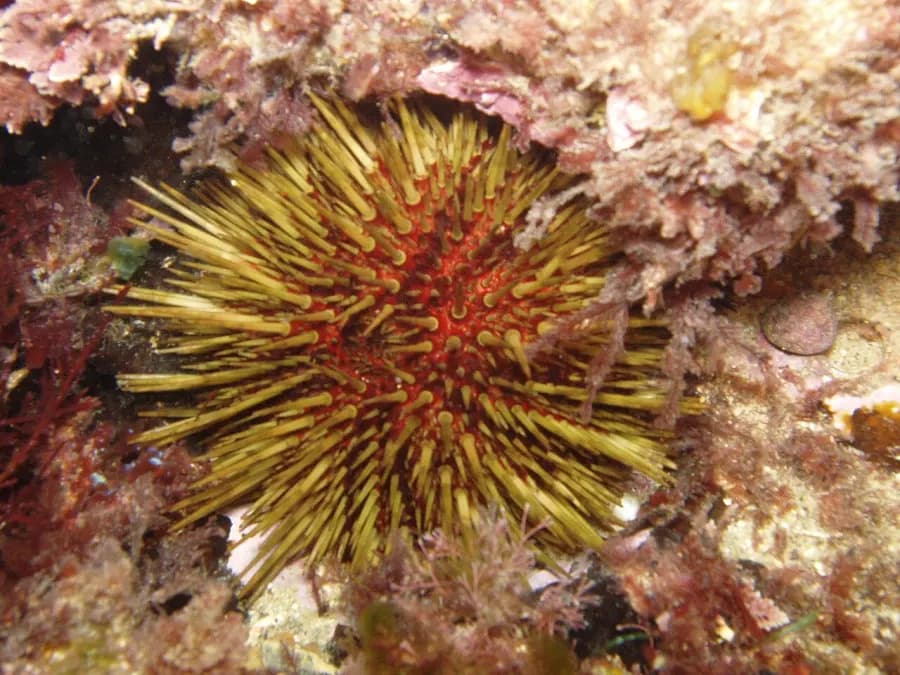
Sea urchins — what it really looks like
Sea urchins
Every rocky shore in the Med; reef tops in the Red Sea

Black spiny balls wedged into rocks in the shallows — exactly where you put a hand or foot during a shore entry.
If it happens: Pull out the spines you can grip; don't dig for the rest. Soak in hot water for the pain. Spines near a joint, or ones that break off deep, are a clinic visit.
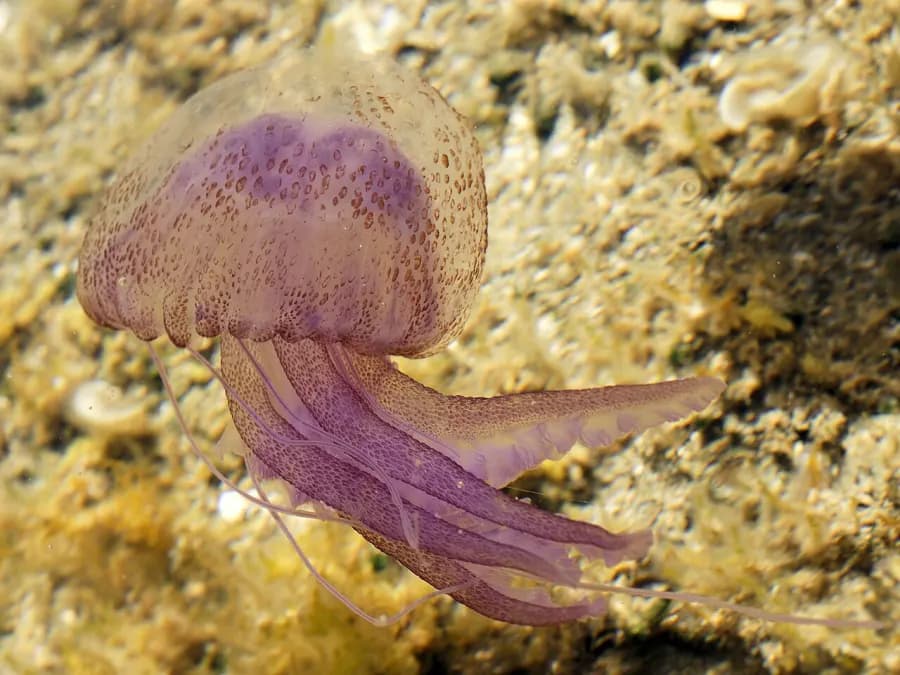
Jellyfish — what it really looks like
Jellyfish
Both seas — the purple mauve stinger blooms across the Med in warm months

Pulsing bells and trailing tentacles; broken-off tentacle fragments in the water still sting. Purple-pink and glowing at night? That's the mauve stinger.
If it happens: Out of the water, rinse with seawater — never fresh water, which fires more stinging cells. Lift remaining tentacles off with tweezers or a glove, then immerse in hot water. Breathing trouble or spreading swelling: 112.
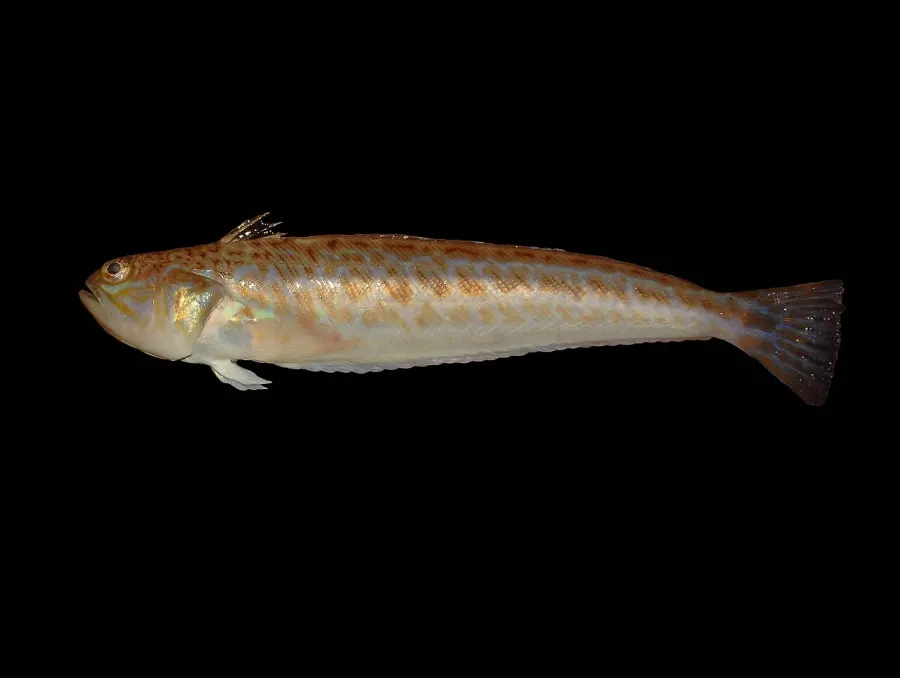
Weever fish — what it really looks like
Weever fish
Sandy shallows across the Mediterranean and Atlantic coasts

You usually don't — it's buried in the sand with venomous dorsal spines up, and it finds barefoot waders during shore entries.
If it happens: The classic hot-water sting: immerse in water as hot as is comfortable (about 45°C) for 30–90 minutes and the pain fades remarkably. Check tetanus cover.
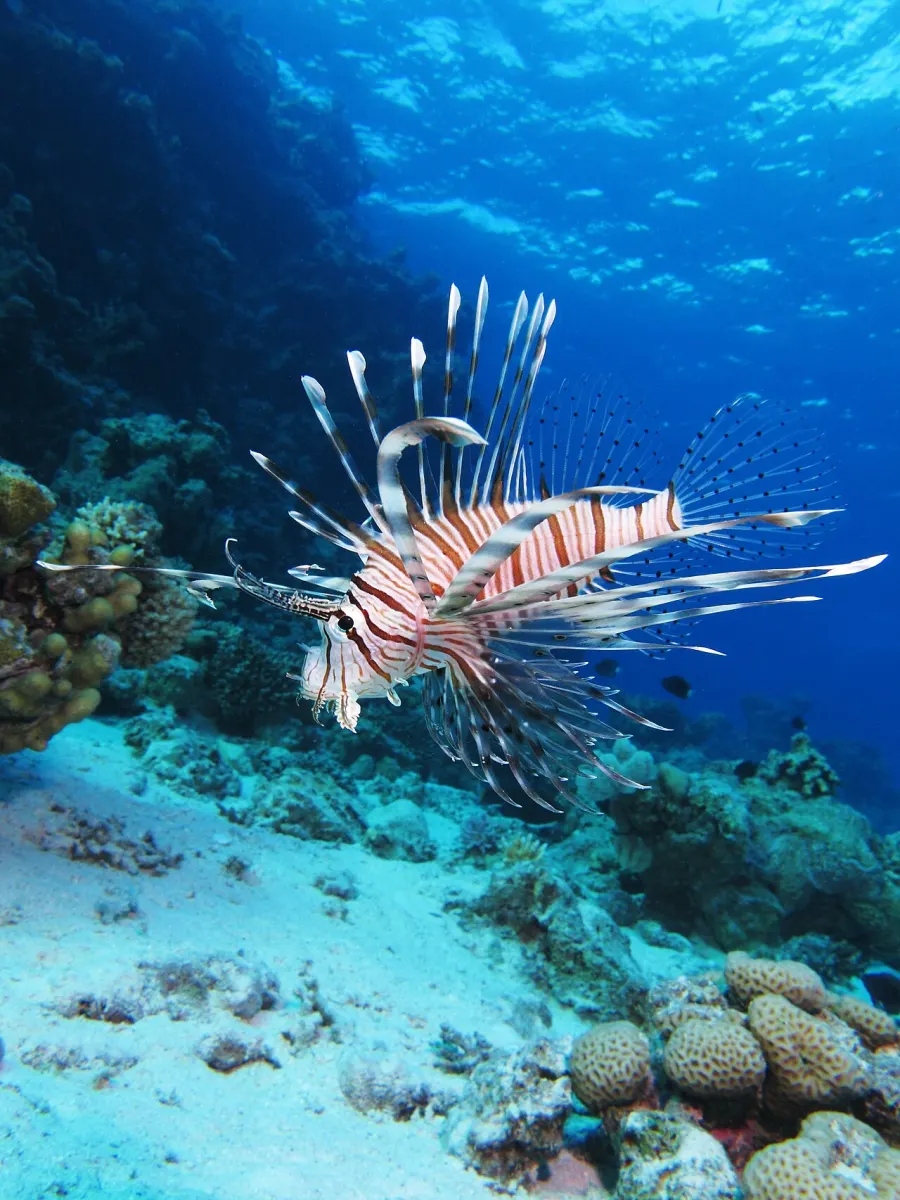
Lionfish — what it really looks like
Lionfish
Red Sea native — and now established across the eastern Med, including Cyprus

Unmistakable: maroon-and-white zebra stripes and a fan of long feathery fins, each hiding a venomous spine. It doesn't flee, which is exactly the trap.
If it happens: Hot-water immersion (about 45°C, 30–90 minutes), remove any visible spine fragments, and get medical attention. Intense pain is normal; systemic symptoms mean 112.
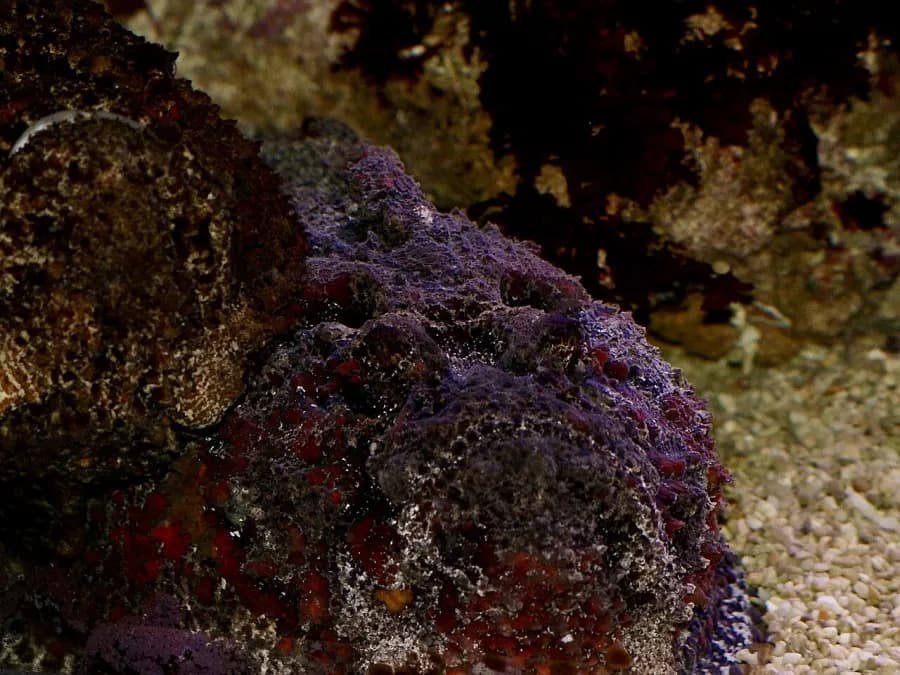
Scorpionfish & stonefish — what it really looks like
Scorpionfish & stonefish
Scorpionfish in both seas; the true stonefish in the Red Sea

Master camouflage — a lumpy 'rock' on the reef or bottom that only moves when touched. Venomous dorsal spines punch through boot soles.
If it happens: Hot-water immersion and straight to medical care — a suspected stonefish sting is an emergency (severe pain, tissue damage; antivenom exists). Don't wait to see how it develops.
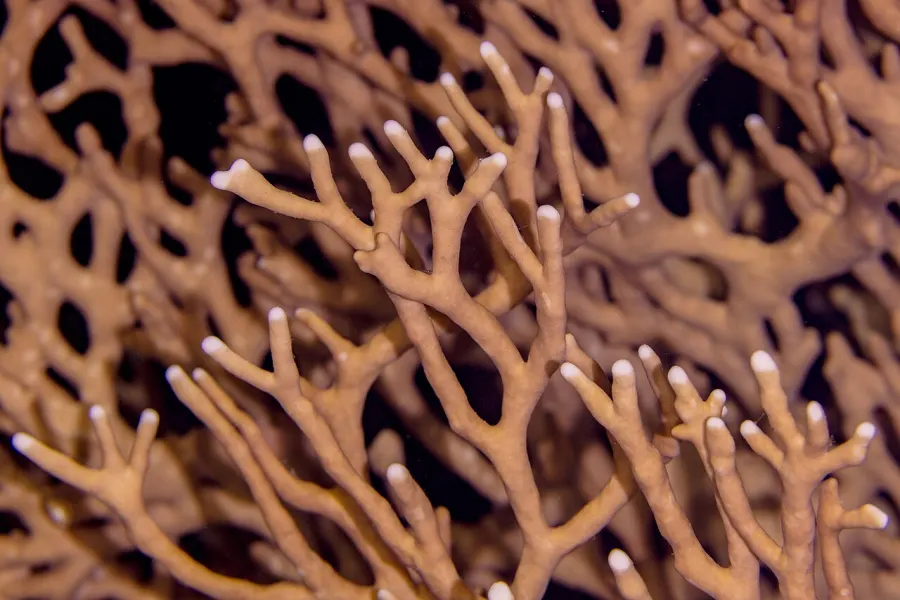
Fire coral — what it really looks like
Fire coral
Red Sea reefs, often on wrecks and reef edges

Mustard-yellow to brown blades and branches with fine white fuzz — it looks like coral but stings like a jellyfish relative, which is what it is.
If it happens: Burning rash within minutes. Rinse with seawater, don't rub, remove any fragments. Vinegar can help; a mild steroid cream settles the itch over days.
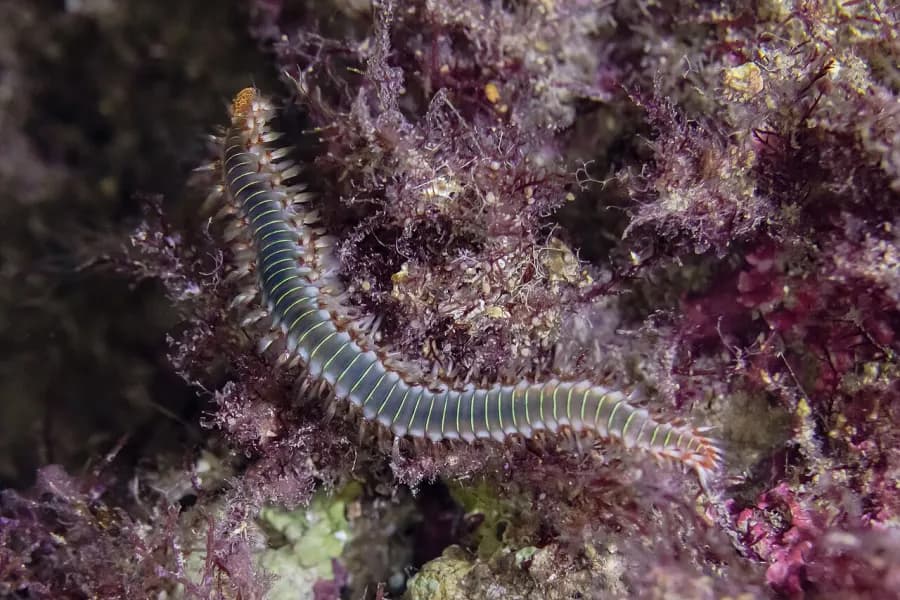
Bristle worms (fireworms) — what it really looks like
Bristle worms (fireworms)
Both seas, on rocks and wrecks — common in the Med

Segmented worms up to 30 cm dressed in tufts of white glassy bristles. The bristles detach into skin like fibreglass.
If it happens: Lift the bristles off with adhesive tape, then vinegar or hot water for the burn. Don't rub — you'll just push them deeper.
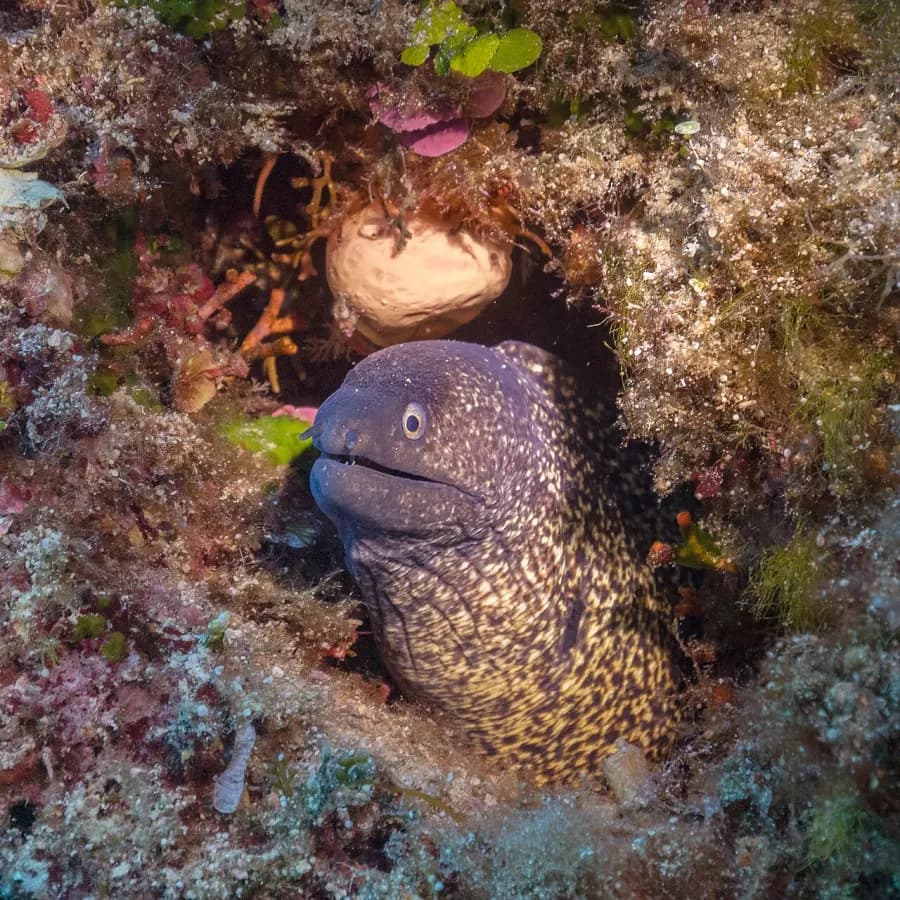
Moray eels — what it really looks like
Moray eels
Holes and crevices in every rocky reef and wreck, both seas

A head rhythmically gaping from a hole. The open mouth isn't aggression — it's breathing — but hands near the hole read as prey.
If it happens: Bites are deep and ragged: control bleeding with direct pressure, wash thoroughly, and see a doctor the same day — marine bites infect readily and usually need antibiotics.
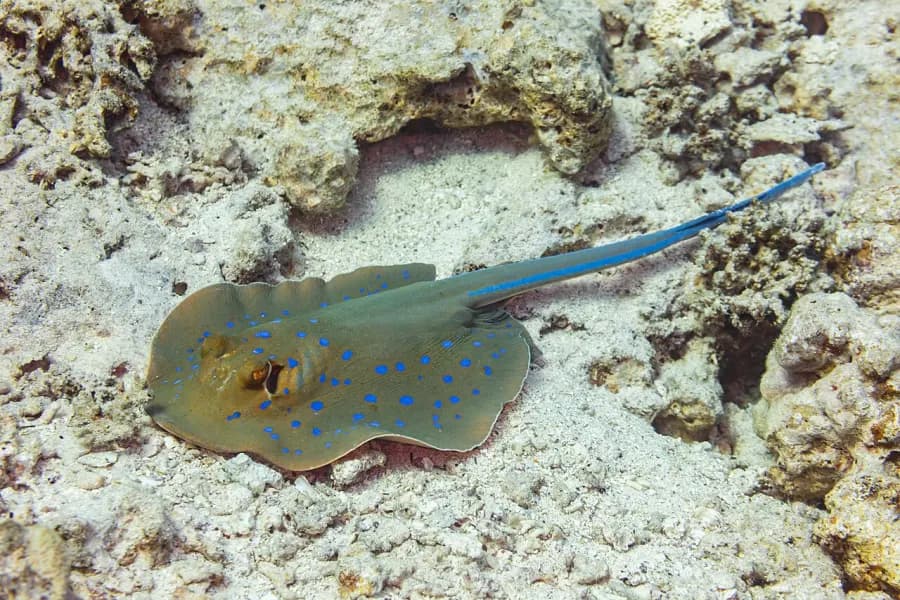
Stingrays — what it really looks like
Stingrays
Sandy bottoms and seagrass in both seas

A flat diamond shadow resting under a dusting of sand. Steps on its back are what trigger the tail barb — hence the shuffle.
If it happens: Rinse, remove obvious debris, hot-water immersion for the venom, then medical care for the wound itself — barb fragments and infection are the real problem. Chest or abdomen strikes are a 112 call.
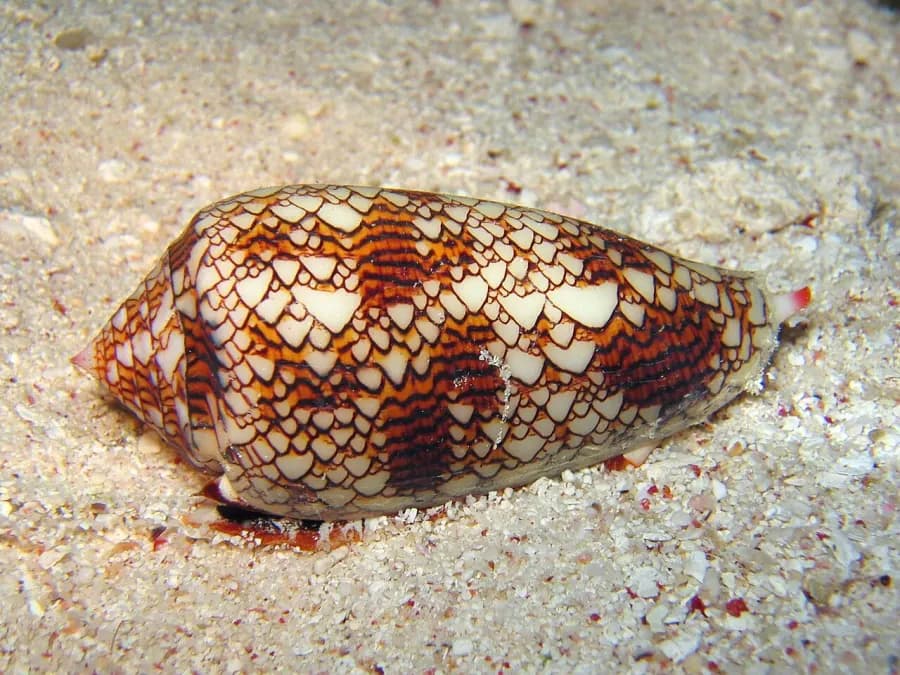
Cone snails — what it really looks like
Cone snails
Red Sea sand and rubble; rare in the Med

Beautiful patterned cone-shaped shells. The live animal fires a venomous harpoon that can penetrate gloves — there is no safe way to hold one.
If it happens: This one is genuinely dangerous: call 112 immediately, apply pressure bandaging and immobilise the limb, be ready to support breathing. Don't cut, suck or tourniquet.
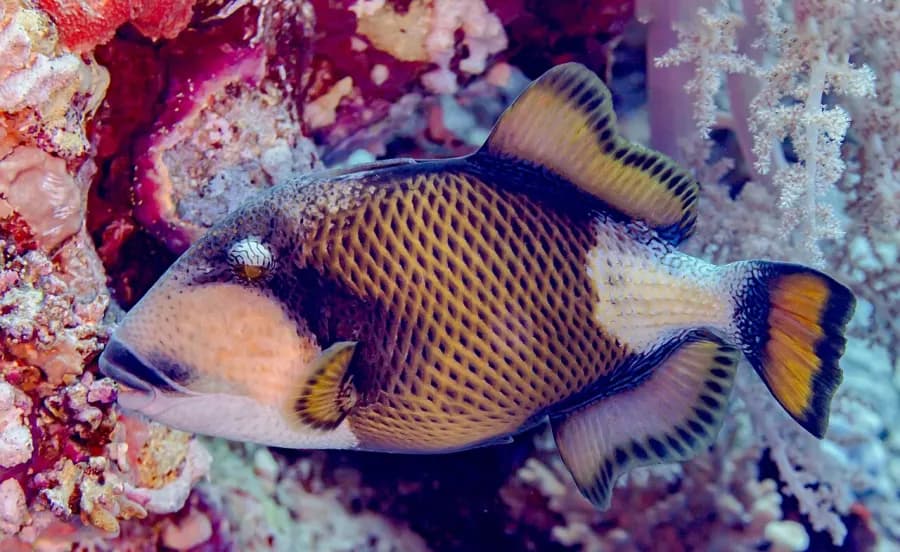
Titan triggerfish — what it really looks like
Titan triggerfish
Red Sea reefs, worst during nesting season

A large wedge-shaped fish patrolling a patch of rubble, suddenly charging. Its nest territory is a cone rising to the surface — ascending puts you deeper into it.

If it happens: Swim away low and horizontal, fins toward the fish, out of the cone. Bites need a proper wound wash and often a doctor — the beak removes flesh.
Any sting becomes a 112 call when you see:

Difficulty breathing, tightness in the throat or chest, swelling spreading beyond the sting site, dizziness or collapse, or any sting to the face or neck. That’s an allergic or systemic reaction, not a “walk it off” — call 112 and follow the first-aid steps.

Hot-water immersion means as hot as is comfortable — about 45°C, tested on unstung skin first — for 30 to 90 minutes. It denatures fish venoms; scalding the casualty helps nobody.

Photo credits — Wikimedia Commons, Creative Commons licenses
  • Sea urchins: photo by Marie-Noëlle de Casamajor / Ifremer, CC BY 4.0
  • Jellyfish: photo by Hans Hillewaert, CC BY-SA 4.0
  • Weever fish: photo by Biopics, CC BY-SA 4.0
  • Lionfish: photo by Alexander Vasenin, CC BY-SA 3.0
  • Scorpionfish & stonefish: photo by Nasser Halaweh, CC BY-SA 4.0
  • Fire coral: photo by Diego Delso, CC BY-SA 4.0
  • Bristle worms (fireworms): photo by Diego Delso, CC BY-SA 4.0
  • Moray eels: photo by Diego Delso, CC BY-SA 4.0
  • Stingrays: photo by Diego Delso, CC BY-SA 4.0
  • Cone snails: photo by Richard Ling, CC BY-SA 3.0
  • Titan triggerfish: photo by Diego Delso, CC BY-SA 4.0