Divemaster Internship: How It Works, What to Ask
What a divemaster internship involves, the free-versus-paid trade honestly explained, and the questions that separate real training from free labour.
Compare courses from certified centres, with dates and prices upfront.
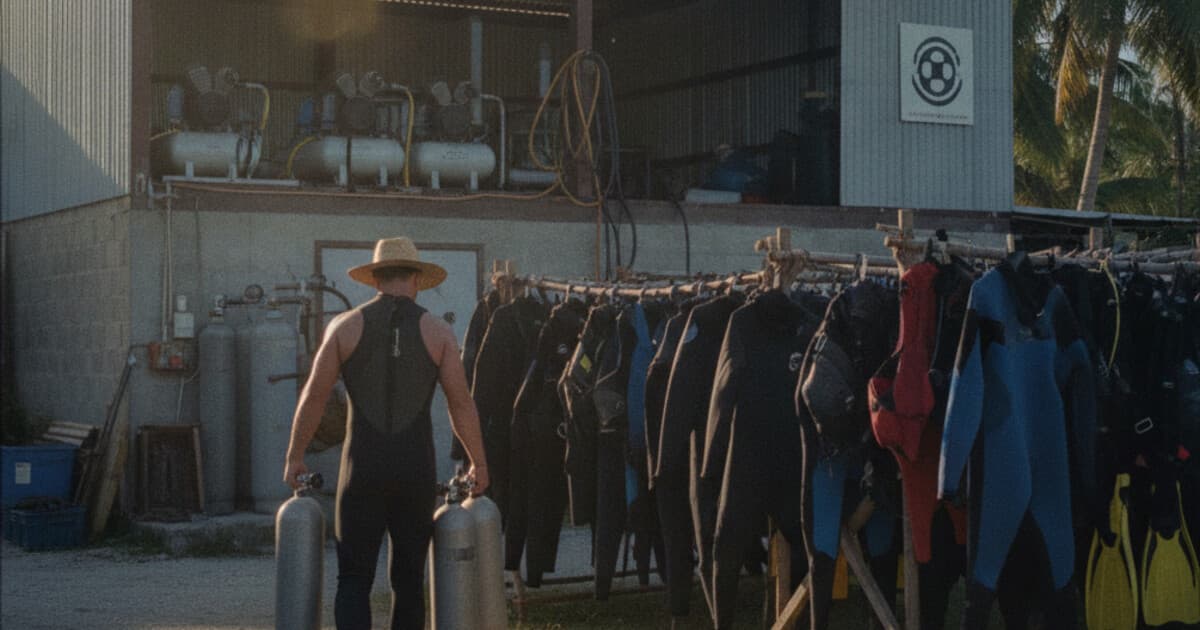
Find a course →A divemaster internship is how most working dive professionals actually crossed the line: not a two-week course, but a month or three inside a real centre: filling tanks at eight, briefing the boat at nine, assisting a course at ten, and logging the sort of dive count that otherwise takes years. Done well it is the best training in diving. Done badly it is free labour with a logbook. This guide is about telling the two apart.
What an internship actually involves
The shape is the same in most centres: you work as part of the operation while completing the Divemaster curriculum — skills workshops, theory, mapped dives, stress tests, all around genuine responsibilities. Expect equipment logistics, guiding certified divers under supervision, assisting instructors with students, and the unglamorous backbone of a dive day: manifests, tanks, weights, compressors.
That mix is precisely the value. A Divemaster certified in a working centre has briefed real boats and handled real customers; agencies require 60 logged dives to certify, and interns usually blow far past that number.
Free versus paid, priced honestly
The classic offer is "free internship": no course fee, in exchange for your work across the season. It can be genuinely fair. It can also mean three months of tank-filling with training squeezed into whatever time is left.
Price it like an adult: your accommodation and living costs for the period, agency materials and registration (usually still charged), and the opportunity cost of the months. Compare that against a paid programme (€700-1,200 typically) that finishes in four to six structured weeks. The question is not which is cheaper on the sticker; it is which produces a Divemaster you would hire.
The questions that sort good from bad
Ask any prospective centre these, in writing:
- Who trains me, and how often? Named instructor, scheduled sessions — or "when we're quiet"?
- What will I actually assist? Real courses with students, or shop work?
- What do I still pay for? Materials, registration, accommodation, gear.
- How many recent interns did you hire afterwards? The single most honest metric a centre can give you.
- What does a normal week look like? If the answer is vague, so is the training.
A centre that answers these crisply is probably a good one; the instructor path that may follow deserves the same scrutiny about pay and structure.
Finding the right centre
Internships are advertised loosely, and quality does not correlate with marketing polish. Look at how a centre runs its ordinary business: browse its courses and daily trips, read reviews written by verified customers, and judge the operation you would be joining. Course listings are a decent window into how a centre presents itself — clear pricing and dates tend to travel with clear training.
Frequently asked questions
+What is a divemaster internship?
A period, usually one to three months, embedded in a working dive centre while you complete Divemaster training. Instead of a short course you live the job: assisting real students, guiding certified divers, running logistics, and building dive numbers fast.
+Are free divemaster internships really free?
"Free" usually means you pay no course fee and the centre keeps your labour. Materials, agency registration and accommodation are often still on you, and the training quality varies wildly. A paid programme with structured teaching is frequently the better deal once you price your months honestly.
+How many dives do you need for a divemaster internship?
Agencies require 40 logged dives to begin Divemaster training and 60 to certify. Good internships accept lower-experience candidates and build the dives in during the first weeks — ask how that is structured before you commit.
+Do divemaster interns get paid?
Rarely during the internship itself; the exchange is training and diving for work. Certified Divemasters who stay on afterwards commonly move to paid seasonal roles, which is one honest measure of an internship — ask how many recent interns the centre actually hired.
Tomas writes about how diver training works: what the agencies teach, how the levels stack up, and what a course involves before you book one.
Compare courses from certified centres, with dates and prices upfront.
Find a course →Keep reading

What belongs in a dive log book, why dive centres ask to see it, paper versus apps, and how to rebuild a patchy log before your next trip.
How to become a scuba diving instructor: the ladder from Open Water to the instructor exam, realistic timelines, what it costs, and where the jobs are.
What a scuba diving instructor salary actually looks like by region, how pay is structured, the income streams that stack on top, and what nobody says.