Diving in Lanzarote: Volcanic Reefs and the Museo Atlántico
Diving in Lanzarote: Puerto del Carmen's shore diving, the Museo Atlántico sculpture museum, angel sharks in winter, and why the island dives year-round.
See live offers from local dive centres — pick a date and compare.
Scan for dives →Diving in Lanzarote is Atlantic diving with none of the Atlantic's usual punishment. The island's volcanic shore drops into clear, mild water where lava has set into reefs, arches and caverns, most of the best sites are walk-in shore dives, and the season simply never ends — which is why northern Europeans have been coming here to dive in January for decades.
It is also the natural gateway to the wider archipelago: our Canary Islands guide compares the islands, and this article covers the one where most people start.
Puerto del Carmen: Playa Chica and the Cathedral
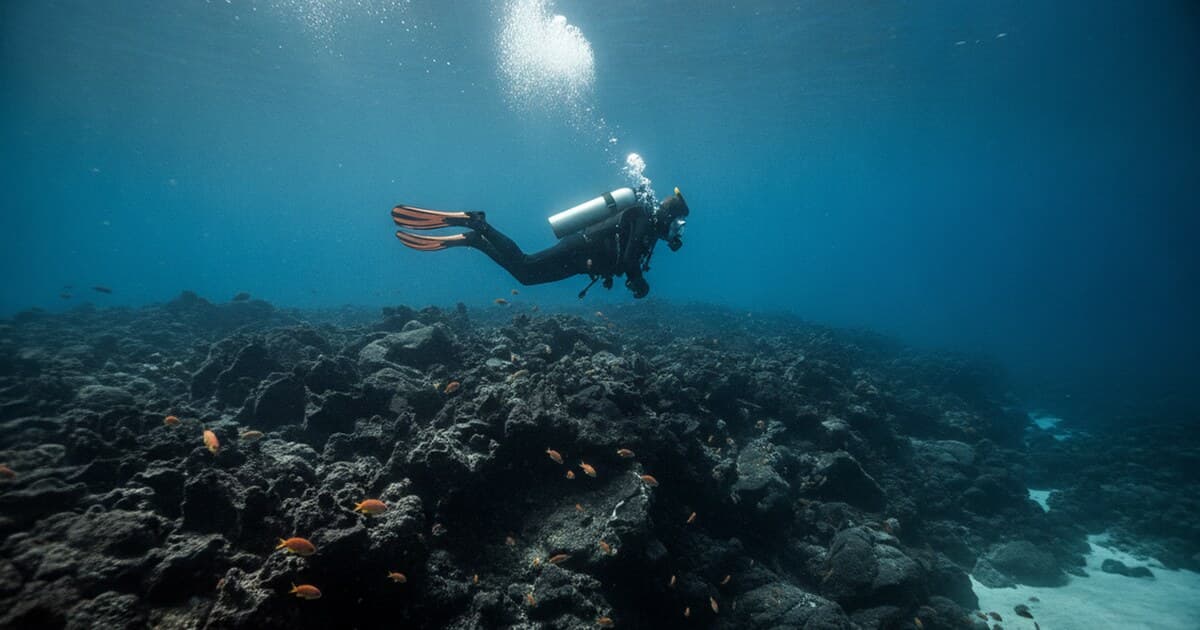
The island's diving capital is a single small bay. Playa Chica, tucked beside Puerto del Carmen's old town harbour, opens onto more variety than seems reasonable: seagrass and sand at training depths, walls stepping down past 30 metres, and swim-throughs in the lava at every level. Damselfish cloud the rocks, barracuda hang in the blue, octopus and cuttlefish work the reef, and the sand holds rays — and, in winter, angel sharks.
The bay's signature is the Cathedral, a wide-mouthed cavern in the wall at around 30 metres, tall enough to enter comfortably and usually holding a resident grouper the size of the divers visiting it. It is an Advanced dive by depth, and one of the Canaries' best-known sites.
A short boat hop away, the harbour wrecks — a cluster of small vessels sunk off the old harbour — stack between roughly 15 and 40 metres, giving Puerto del Carmen a wreck fix without leaving town.
Playa Blanca and the Museo Atlántico
At the island's southern tip, Playa Blanca's calm bays host Lanzarote's most famous dive. The Museo Atlántico is Europe's first underwater sculpture museum: some 300 life-cast concrete figures arranged on sand at 12-15 metres — a ring of figures, a raft, a garden of hybrid human-cactus forms — placed by sculptor Jason deCaires Taylor and left for the ocean to claim. A decade on, the surfaces carry growth and the fish have moved in.
The depth suits any certified diver, and the concept will be familiar to anyone who has dived Cyprus's MUSAN — the two are the Mediterranean-Atlantic pair of the same idea.
Costa Teguise and the north
The northeast coast around Costa Teguise is the quieter third of the island's diving, with reef fingers and easy entries suited to relaxed second dives and training. Further north the coast wilds out towards the Chinijo Archipelago around La Graciosa — one of Europe's largest marine reserves, run as boat trips in settled weather, with the biggest grouper and the least company.
Marine life: the angel shark island
Lanzarote's headline animal is the angel shark. Critically endangered and effectively gone from the rest of Europe, the species holds on in the Canaries, and Lanzarote's sandy bays are its most dependable meeting point — a flat, broad-winged shark lying buried to its eyes in sand, usually in winter when they move shallow. They are strictly protected; centres brief the rules, which amount to: keep your distance, keep your hands to yourself.
Around them: round stingrays and eagle rays, seahorses in the seagrass, big schools of bastard grunt and bream over every reef, and barracuda overhead.
Seasons and practicalities
The Atlantic here is subtropical, not northern. Water runs about 18-19°C in late winter and 23-24°C by early autumn; locals wear 7mm in February and 5mm the rest of the year. Visibility sits in the 20-30 metre band most days. Flights from the UK and most of Europe run about four hours, which — with the winter season — is the island's real trump card: it is where European divers go when everywhere nearer is cold.
Guided shore dives commonly run €35-50, boat dives and the Museo Atlántico a little more, and courses price well below Europe's summer resorts because the centres work all twelve months.
Booking it
Lanzarote's sites sit in our Spain dive-site catalogue alongside the rest of the Canaries. Diving Scanner's bookable offers start in Cyprus today; as Canary Island centres join, their dives and courses appear in the same search — prices upfront, a small deposit online, the balance paid at the centre.
Frequently asked questions
+Is Lanzarote good for scuba diving?
Yes — it is the busiest dive destination in the Canary Islands for a reason. Volcanic reefs, caverns and drop-offs sit minutes from shore, visibility runs 20-30 metres, the water never drops below about 18°C, and most of the famous sites are shore entries, which keeps diving cheap and flexible.
+What is the Museo Atlántico?
Europe's first underwater sculpture museum, created by Jason deCaires Taylor off Playa Blanca. Around 300 concrete figures sit on sand at 12-15 metres, shallow enough for any certified diver, and the sculptures have matured into an artificial reef. It is Lanzarote's signature dive in the way the MUSAN is Cyprus's.
+Can you see angel sharks in Lanzarote?
Yes — the Canary Islands are the last stronghold of the critically endangered angel shark, and Lanzarote's sandy bays are among the most reliable places anywhere to meet one. Winter is the season, when they move shallow. They are protected: look, photograph, never touch.
+When is the best time to dive in Lanzarote?
It genuinely dives year-round. Water peaks around 23-24°C in September-October and bottoms at 18-19°C in February-March, when a 7mm suit is standard. Winter brings the angel sharks; summer brings the warmest water and the most visitors. There is no closed season.
+Where is the best diving in Lanzarote?
Puerto del Carmen's Playa Chica is the classic — a small bay opening onto caverns, drop-offs and the Cathedral cave, all from shore. Playa Blanca has the Museo Atlántico, and Costa Teguise serves the island's quieter northeast. Most divers base in Puerto del Carmen.
+Do beginners dive in Lanzarote?
Constantly. The sheltered bays give easy, shallow entries with plenty to see, conditions are stable enough for training year-round, and courses cost less than in most of Europe's summer-only destinations. Playa Chica alone takes divers from first splash to 40-metre walls.
Elena covers dive destinations around the Mediterranean — where to go, when the water is worth it, and what a week of diving actually costs.
See live offers from local dive centres — pick a date and compare.
Scan for dives →Planning the trip? Diving in Spain →
Keep reading
Plan your Great Barrier Reef dive trip: best sites, best season, realistic costs and how to choose between day trips and liveaboards.
A practical guide to diving in Bali: the best sites from Tulamben to Nusa Penida, seasonal timing, realistic costs and how to find a dive centre.
Koh Tao diving: 25+ sites, PADI Open Water from $290, and warm water year-round. This guide covers the best sites, seasons, and real costs.