Scuba Diving in the Canary Islands: Choosing Your Island
Scuba diving in the Canary Islands, island by island: Lanzarote, Tenerife, Gran Canaria, Fuerteventura, La Palma and El Hierro compared, with seasons.
See live offers from local dive centres — pick a date and compare.
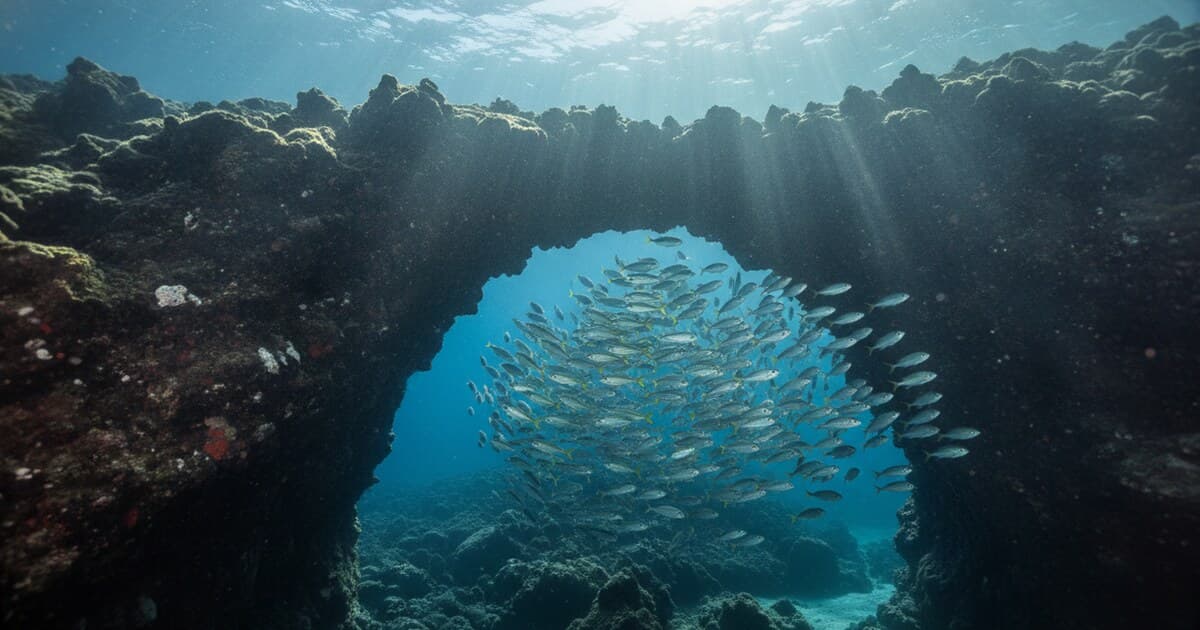
Scan for dives →Scuba diving in the Canary Islands solves the European diver's oldest problem: what to do between October and May. Eight volcanic islands off the African coast sit in Atlantic water that never leaves the 18-24°C band, four hours from most of Europe, with lava seabeds that make every dive an architecture tour — arches, caverns, swim-throughs and walls, most of them reachable from shore.
The islands differ more than first-time visitors expect, and choosing the right one is most of planning the trip. Here is the archipelago, island by island — all of them mapped in our Spain dive-site catalogue.
Lanzarote: the all-rounder
The busiest dive island and the easiest recommendation. Puerto del Carmen's Playa Chica packs caverns, walls and the famous Cathedral cave into one shore-entry bay; Playa Blanca has the Museo Atlántico, Europe's first underwater sculpture museum; and the island's sandy bays are the archipelago's most reliable place to meet a wintering angel shark. Our Lanzarote guide covers it in full.
Tenerife: turtles, rays and volume
The biggest island carries the biggest dive industry, based along the south coast around Los Cristianos, Las Galletas and Costa Adeje. The diving is volcanic reef and sand at friendly depths, with the archipelago's most dependable green turtles and big rays — stingrays, butterfly rays and eagle rays — as the draws. Offshore, resident pilot whales patrol the deep channel towards La Gomera, the subject of a whole whale-watching industry. Tenerife suits divers sharing a holiday with non-divers: the resort infrastructure is enormous.
Gran Canaria: El Cabrón and the wrecks
Gran Canaria's east coast holds El Cabrón marine reserve at Arinaga — arches and caverns with the density of fish only protection produces, and a strong angel shark record of its own. The south around Mogán adds a cluster of scuttled wrecks on sand. Conditions are a touch more exposed than Lanzarote's leeward bays; the reward is fishier reefs.
Fuerteventura: clear water and Lobos
The channel between Corralejo and the islet of Lobos — a protected marine reserve — gives Fuerteventura the clearest water in the eastern islands, over white sand that turns the light Caribbean-blue. The diving is relaxed: reef fingers, rays on sand, barracuda in the current seams. It pairs naturally with the island's surf-and-beach holiday scene.
La Palma and El Hierro: the wild west
The young western islands are the connoisseur's Canaries. La Palma is lava architecture at its most dramatic — towers, tunnels and the Malpique dive, where 40 stone crosses stand on the seabed as a memorial. El Hierro, the smallest and remotest island, has the archipelago's best diving outright: the La Restinga reserve on the Mar de las Calmas, where visibility stretches past 30 metres and groupers have grown old unhunted. Neither island does mass tourism; both reward divers who travel for the diving itself.
La Gomera and tiny La Graciosa complete the eight, both quiet, both worth a day if you are there.
Which island, in one table
| Island | Signature | Best for |
|---|---|---|
| Lanzarote | Playa Chica, Museo Atlántico, angel sharks | First Canaries trip, training |
| Tenerife | Turtles, rays, pilot whales offshore | Mixed diver/non-diver holidays |
| Gran Canaria | El Cabrón reserve, Mogán wrecks | Fish density, reserves |
| Fuerteventura | Lobos channel clarity | Relaxed diving, beach trips |
| La Palma | Lava architecture, Malpique crosses | Photographers, explorers |
| El Hierro | La Restinga reserve | The best diving, full stop |
Seasons
There is no season to avoid. Winter (18-19°C, 7mm suits) is angel shark time and the islands' busiest diving months, because the rest of Europe is cold. Summer and early autumn (up to 24°C) bring the warmest water and calmest seas. Courses run every month — worth knowing if a winter certification is the plan — and the 18-hour no-fly rule is the only scheduling constraint that never changes.
Booking it
Every island above is mapped in the Spain catalogue. Diving Scanner's bookable offers start in Cyprus today; as Canarian centres join, their dives and courses appear in the same search — prices upfront, a small deposit online, the balance paid at the centre.
Frequently asked questions
+Are the Canary Islands good for scuba diving?
Very — they are Europe's only true year-round dive destination. Volcanic seabeds give arches, caverns and walls; the Atlantic stays between roughly 18 and 24°C; visibility runs 20-30 metres; and the archipelago holds the last healthy population of the critically endangered angel shark.
+Which Canary Island has the best diving?
El Hierro's La Restinga marine reserve is the connoisseur's answer — the clearest water and the most fish. Lanzarote is the best all-rounder and the easiest trip; Tenerife adds turtles and rays; Gran Canaria has the El Cabrón reserve. "Best" mostly depends on whether you want convenience or wilderness.
+When can you dive in the Canary Islands?
All year. Water bottoms at about 18°C in February-March and peaks at 23-24°C in September-October, so the islands fill with European divers precisely when the Mediterranean shuts down. Winter is also angel shark season. A 7mm suit covers the coolest months, 5mm the rest.
+Can you see sharks in the Canary Islands?
The one that matters is the angel shark — a flat, sand-dwelling species now critically endangered everywhere else, for which the Canaries are the last stronghold. Winter sightings on sandy bays are reliable, especially off Lanzarote, Gran Canaria and Tenerife. It is strictly protected and never touched.
+Are the Canary Islands good for learning to dive?
Excellent. Sheltered volcanic bays give calm, shallow shore entries; conditions are stable in every month, so courses never rush against a season; and prices undercut Europe's summer resorts because centres work year-round. Lanzarote and Tenerife carry the biggest training scenes.
+Which is warmer for diving, the Canaries or the Mediterranean?
Summer belongs to the Mediterranean, which can pass 27°C where the Canaries top out around 24°C. Winter reverses it completely: the Atlantic around the Canaries holds 18-19°C while much of the Med drops to 15-16°C and its resorts close. The Canaries' real advantage is that the answer never matters — they dive every month.
Elena covers dive destinations around the Mediterranean — where to go, when the water is worth it, and what a week of diving actually costs.
See live offers from local dive centres — pick a date and compare.
Scan for dives →Planning the trip? Diving in Spain →
Keep reading
Plan your Great Barrier Reef dive trip: best sites, best season, realistic costs and how to choose between day trips and liveaboards.
A practical guide to diving in Bali: the best sites from Tulamben to Nusa Penida, seasonal timing, realistic costs and how to find a dive centre.
Koh Tao diving: 25+ sites, PADI Open Water from $290, and warm water year-round. This guide covers the best sites, seasons, and real costs.