Scuba Diving in Protaras, Cyprus: Sites and Seasons
Protaras dive sites, water temperatures, and marine life. Plan scuba diving in Protaras, Cyprus with this guide to sites, seasons, and what to expect.
See live offers from local dive centres — pick a date and compare.
Scan for dives →Protaras sits on Cyprus's east coast, tucked into the corner where Cape Greco juts into the Levantine Sea. The water here is genuinely clear: 25 to 40 metres of visibility is routine from late spring through autumn, and the dive sites span everything from a 10-metre beginner bay to purpose-sunk wrecks at 27m. It's one of the most accessible diving destinations in the Mediterranean, with a season that stretches eight months and a cluster of sites concentrated within a short boat ride. Whether you're picking up your Open Water card for the first time or chasing wreck dives with an Advanced certification, scuba diving in Protaras, Cyprus has a site that fits.
Scuba diving in Protaras, Cyprus suits all skill levels, from the shallow Green Bay (max 10m) to the Liberty Wreck at 23–27m depth. The dive season runs April through November, peaking May to September when water temperatures reach 22–27°C and visibility regularly hits 30m. Multiple PADI, SSI, and NAUI dive centres operate locally, offering discovery dives from age 8.
Dive Sites in Protaras: What's Actually Down There
Green Bay is the standard starting point for new divers and the most used training site on the east coast. The maximum depth is 10m, the inlet is sheltered enough that conditions are calm even when the open sea has a chop, and the bottom has encrusted pottery and columns that attract dense fish life. Damselfish, ornate wrasse, and sea bream cluster here in numbers. Night dives run regularly from Green Bay because the entry and exit are easy to manage in the dark.
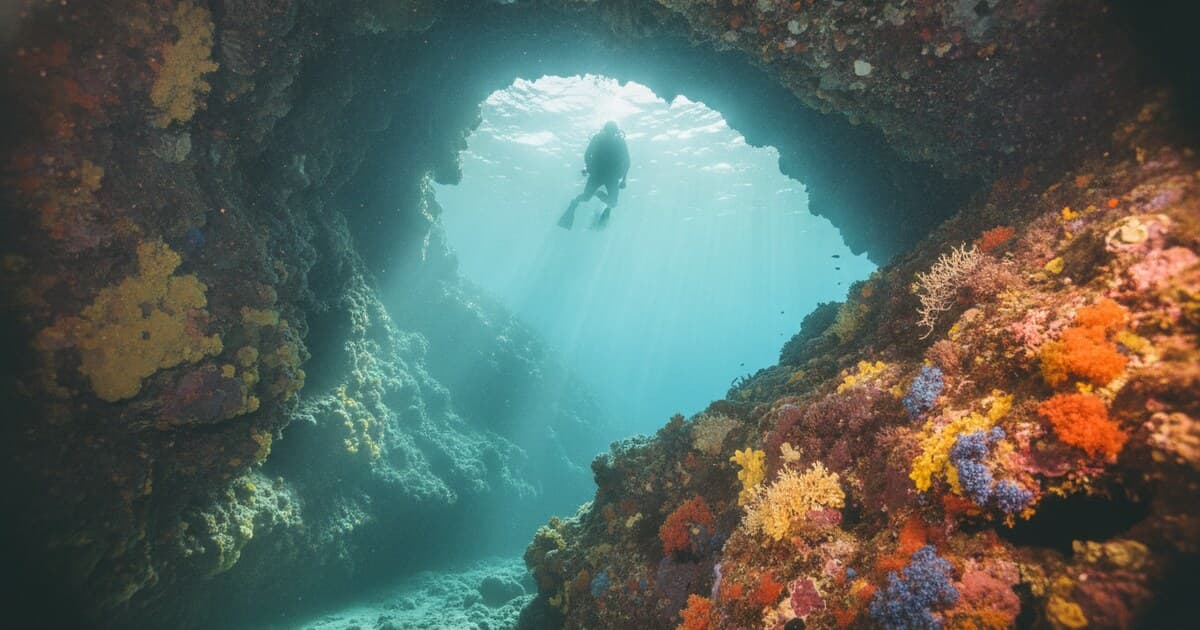
The Caves at Cape Greco are the most photographed sites in the area. Maximum depth is 12m, but most of the interest is shallower; the cavern walls are studded with coloured stones that catch your torch beam, and the through-and-through passages are wide enough to feel comfortable even for divers new to overhead environments. Two entry points: a 1.5m drop and a 3m drop, both accessible to Open Water divers. Moray eels, grouper, ornate wrasse, and octopuses work the reef edges around the cave mouths, and loggerhead turtles come through regularly.
De Costa Bay is the site to target if spotting sea turtles is the goal. Both loggerhead and green turtles frequent this shallow bay, often visible at just 2–4m depth. The site runs to a maximum of 11m, has 15m+ visibility, and uses a shore entry, easy to access without a boat.
Octopus Reef descends to 15m along a rocky shore that's riddled with crevices. The marine life density is high for a shore dive: nudibranch, lionfish, grouper, sea urchins, octopuses, moray eels, and the occasional turtle all turn up regularly. Visibility averages 20m+.
The Liberty Wreck is Protaras's main advanced site. The 37-metre vessel was deliberately sunk on 27 May 2009 and now rests at 23–27m depth, about a 10-minute boat ride from shore. Moray eels, stingrays, and lionfish have colonised the structure in the years since. Open Water divers can reach the top of the wreck; full penetration dives require an Advanced certification or guidance from a dive instructor.
The Nemesis Wreck, a 26m former deep-sea trawler at 24m depth, sits a kilometre from shore. It's smaller and more compact than the Liberty, which makes it a natural second wreck dive to pair in the same morning on a boat.
The Kyrenia Shipwreck was sunk in March 2015, modelled on an ancient Greek trading vessel. At 23m depth and 29m long, it offers the same wreck-colonising marine life as the Liberty but with a more archaeological look. Visibility averages 25m.
For Cyprus's most famous wreck dive, the Zenobia ferry is a two-hour drive west near Larnaca, resting at 42m. Boats often run multi-day trips combining Protaras sites with a Zenobia dive for divers who want both in one trip.
Water Conditions and Marine Life
Protaras occupies the eastern corner of Cyprus, backed by Cape Greco National Forest Park and open to the Levantine Sea. The region's Mediterranean climate produces Cyprus's longest usable dive season, running from April through November, roughly eight months compared to five or six in northern Mediterranean destinations. Water temperatures climb from 19°C in April to a peak of 28°C in August, then ease back to around 22°C by November. Summer visibility frequently exceeds 30m, and at the best offshore sites you can see 50m. The marine ecosystem is typical eastern Mediterranean: grouper, sea bream, damselfish, barracudas, Mediterranean moray eels (Muraena helena), loggerhead turtles (Caretta caretta), octopuses, nudibranch, and at the wrecks occasional lionfish and stingrays. Cape Greco's Marine Protected Area designation since 2008 has kept the inshore sites in better condition than more heavily fished stretches of nearby coastline, which shows in the fish density at sites like The Caves and Octopus Reef.
The wrecks have built their own ecosystems over time. The Liberty Wreck, sunk 17 years ago, has become encrusted with soft coral and sponge, and its holds and engine room are now permanent addresses for a rotating cast of moray eels. Even the newer Kyrenia holds resident fish populations from its first season after sinking.
Best Time of Year to Dive in Protaras
April through November is the dive season. Most centres open in April and run through to late October or early November.
June to September is the peak window: water temperatures of 24–27°C, minimal current, and visibility often hitting 40m. It's also when dive boats are busiest, so booking ahead matters.
May and October are strong shoulder options. May has warming water (22–23°C), lighter crowds than midsummer, and full site access. October brings the warmest water temperatures of the whole year at depth, because the sea takes weeks to shed the August heat, and the summer charter rush has passed. Both are worth considering if flexibility on travel dates is on the table.
Winter diving is possible for experienced divers with a 7mm wetsuit or drysuit. Water drops to around 17°C in January and February, but visibility is often superb (less boat traffic means less disturbed sediment), and you'll have the sites to yourself.
If you're comparing east coast options, scuba diving in Ayia Napa runs on roughly the same seasonal calendar and shares some sites (the MUSAN underwater sculpture museum is technically Ayia Napa but reachable on the same boats as Protaras sites). Most dive centres in the area cover both locations.
Beginner Scuba Diving in Protaras
Protaras is one of the more organised spots in the Mediterranean for first-time divers. Discovery dives (often called try dives) are available from age 8 and require no prior experience or certification. You'll get a briefing in shallow water, then go to 5–6m with an instructor alongside you the whole time. Green Bay is the standard site for this: conditions are gentle, entry and exit are straightforward, and the fish life makes the whole thing worthwhile even at 5m depth.
For a full certification, Open Water courses take four days and qualify you to 18m. Most centres teach under PADI, SSI, or NAUI. Once certified to Open Water level, most Protaras sites are within your rating. The Liberty and Nemesis wrecks are the exception: diving those well requires an Advanced certification or direct supervision.
Courses can be booked to start on any day of the season. If you have the time, doing your confined-water sessions in a pool or at Green Bay one afternoon and then completing your open-water dives over the following two days is the common pattern.
How to Find and Book Diving in Protaras
The east coast of Cyprus has a concentration of dive centres competing for the same pool of tourists, which is good for availability but makes comparison awkward when you're booking from abroad. Prices and what's included in a "dive experience" vary more than you'd expect between operators.
Diving Scanner lists verified dive centres in Cyprus with real-time availability. You search by date and party size, see which slots are open, and reserve with a 10% deposit. The remaining balance goes directly to the dive centre. Legitimate cancellations get a full refund including that deposit. Groups larger than 8 divers have a private charter inquiry route available through the platform.
For a broader look at Cyprus diving beyond the east coast, including Paphos dive sites and the Zenobia wreck, the Cyprus diving guide covers the whole island's dive map.
Frequently Asked Questions
Is Protaras good for beginner scuba divers?
Yes. Green Bay is one of the most beginner-friendly sites in the eastern Mediterranean: max 10m depth, sheltered conditions, easy shore entry, and dense fish life. Discovery dives are available from age 8 with no prior experience. Multiple centres offer Open Water certification courses starting any day of the season.
What is the best dive site in Protaras?
It depends on what you're after. Green Bay for beginners, The Caves at Cape Greco for cave diving and marine life photography, De Costa Bay for sea turtle sightings at 2–4m, and the Liberty Wreck at 23–27m for advanced divers who want a substantial structure dive. Octopus Reef is the best shore dive for marine life density.
When is the best time to dive in Protaras?
May to October gives the best combination of water temperature (22–27°C) and visibility (often 30m+). May and October avoid the peak-season crowds while still offering full site access. The warmest water is actually September to October, when the sea holds the August heat. The season officially runs April through November.
Do I need a diving certification to dive in Protaras?
You don't need a certification for a discovery dive, which is an introductory guided experience available from age 8. For independent diving, an Open Water certification qualifies you to 18m and covers most Protaras sites. The Liberty and Nemesis wrecks at 24–27m are typically reserved for Advanced-certified divers or those diving under direct instructor supervision.
What marine life will I see scuba diving in Protaras?
The east coast holds grouper, sea bream, damselfish, barracudas, Mediterranean moray eels, octopuses, and nudibranch across most sites. Loggerhead and green turtles are frequently spotted at De Costa Bay and The Caves. The wrecks (Liberty, Nemesis, Kyrenia) hold stingrays, lionfish, and permanent moray populations. Visibility in summer regularly exceeds 30m, so sightings happen at distance as well as up close.
Ready to book? Search Diving Scanner to find available dive experiences on Cyprus's east coast, filter by date and group size, and compare what's on offer from verified local centres.
Frequently asked questions
+Is Protaras good for beginner scuba divers?
Yes. Green Bay is one of the most beginner-friendly sites in the eastern Mediterranean: max 10m depth, sheltered conditions, easy shore entry, and dense fish life. Discovery dives are available from age 8 with no prior experience. Multiple centres offer Open Water certification courses starting any day of the season.
+What is the best dive site in Protaras?
It depends on what you're after. Green Bay for beginners, The Caves at Cape Greco for cave diving and marine life photography, De Costa Bay for sea turtle sightings at 2-4m, and the Liberty Wreck at 23-27m for advanced divers. Octopus Reef is the best shore dive for marine life density.
+When is the best time to dive in Protaras?
May to October gives the best combination of water temperature (22-27°C) and visibility (often 30m+). May and October avoid peak-season crowds while offering full site access. The warmest water is September to October, when the sea holds the August heat. The season officially runs April through November.
+Do I need a diving certification to dive in Protaras?
You don't need certification for a discovery dive, an introductory guided experience available from age 8. For independent diving, an Open Water certification qualifies you to 18m and covers most Protaras sites. The Liberty and Nemesis wrecks at 24-27m are recommended for Advanced-certified divers or those under direct instructor supervision.
+What marine life will I see scuba diving in Protaras?
Grouper, sea bream, damselfish, barracudas, Mediterranean moray eels, octopuses, and nudibranch across most sites. Loggerhead and green turtles are frequently spotted at De Costa Bay and The Caves. The wrecks hold stingrays, lionfish, and permanent moray populations. Summer visibility regularly exceeds 30m.
Elena covers dive destinations around the Mediterranean — where to go, when the water is worth it, and what a week of diving actually costs.
See live offers from local dive centres — pick a date and compare.
Scan for dives →Planning the trip? Diving in Cyprus →
Keep reading
Plan your Great Barrier Reef dive trip: best sites, best season, realistic costs and how to choose between day trips and liveaboards.
A practical guide to diving in Bali: the best sites from Tulamben to Nusa Penida, seasonal timing, realistic costs and how to find a dive centre.
Koh Tao diving: 25+ sites, PADI Open Water from $290, and warm water year-round. This guide covers the best sites, seasons, and real costs.