Diving in Gozo: Sites, Season and Costs
Complete guide to diving in Gozo: top sites by cert level, best season, costs and how to get there from Malta.
See live offers from local dive centres — pick a date and compare.
Scan for dives →Gozo punches above its weight in the Mediterranean. The island is smaller and quieter than Malta, but the underwater geology is something else: sheer limestone walls, cathedral-sized caverns, and natural arches that start at 7 metres and drop into open-ocean blue. Divers come from across Europe specifically to dive in Gozo for sites like the Blue Hole and the Inland Sea, and whether you're on an Open Water course or hunting advanced profiles past 30 metres, the site variety here justifies the trip.
Getting here takes under an hour from Malta. Getting underwater takes about the same time after that. What you find below the surface has kept Gozo on every serious Mediterranean diver's list for decades.
Gozo's dive sites span 6 to 42 metres and suit every certification level from beginner to technical. Visibility regularly reaches 25 to 30 metres, almost all major sites are shore-entry, and a full-day guided dive covers two sites by early afternoon. Expect to pay €38 to €65 for a single guided dive with equipment included.
Why Gozo Draws Divers from Across Europe
Malta's diving reputation runs on its wrecks. Gozo's runs on its geology.
The island sits on a thick limestone plateau that marine erosion has carved into walls, arches, swim-throughs, and collapsed caverns over millions of years. It holds four distinct dive zones: Dwejra on the west coast (home to the Blue Hole and Inland Sea), Xwejni in the north (Cathedral Cave and Double Arch), Xlendi in the south (the Xlendi Tunnel and Ix-Xini bay), and Mgarr on the southeast coast (wrecks MV Karwela and MV Xlendi at 34 to 42 metres). Visibility averages 20 to 30 metres across most of the year, touching 35 metres in September and October as thermoclines settle. Water temperature runs 16 to 17°C in February and 24 to 26°C through July to September. Currents are mild at most sites, though the Blue Hole chimney and the Double Arch at Xwejni see stronger water movement on incoming tides. Almost all major sites are shore-entry, and a standard guided dive day covers two sites before early afternoon.
Shore entry is the norm rather than the exception here. You walk to the site, kit up, and get in: no marina queue, no 40-minute boat ride. The Dwejra cluster alone (Blue Hole, Inland Sea, and Cathedral Wall) can fill two full dive days without repeating a site.
Gozo Dive Sites by Certification Level
Knowing which sites match your ticket saves time on arrival and avoids the awkward conversation at the briefing.
Open Water (beginner-suitable)
Xlendi Tunnel (10-11m) is the go-to warm-up site and a genuine dive in its own right. The first section is a dark cavern; further in, the tunnel ceiling rises above the waterline and catches light reflections on the surface. Dive before noon for the best light. The nearby Ix-Xini bay (max 15m) is a sheltered inlet with a seagrass meadow and one of Gozo's best spots for seahorses, flying gurnards, and cuttlefish. Both run in almost any weather.
Advanced Open Water (intermediate)
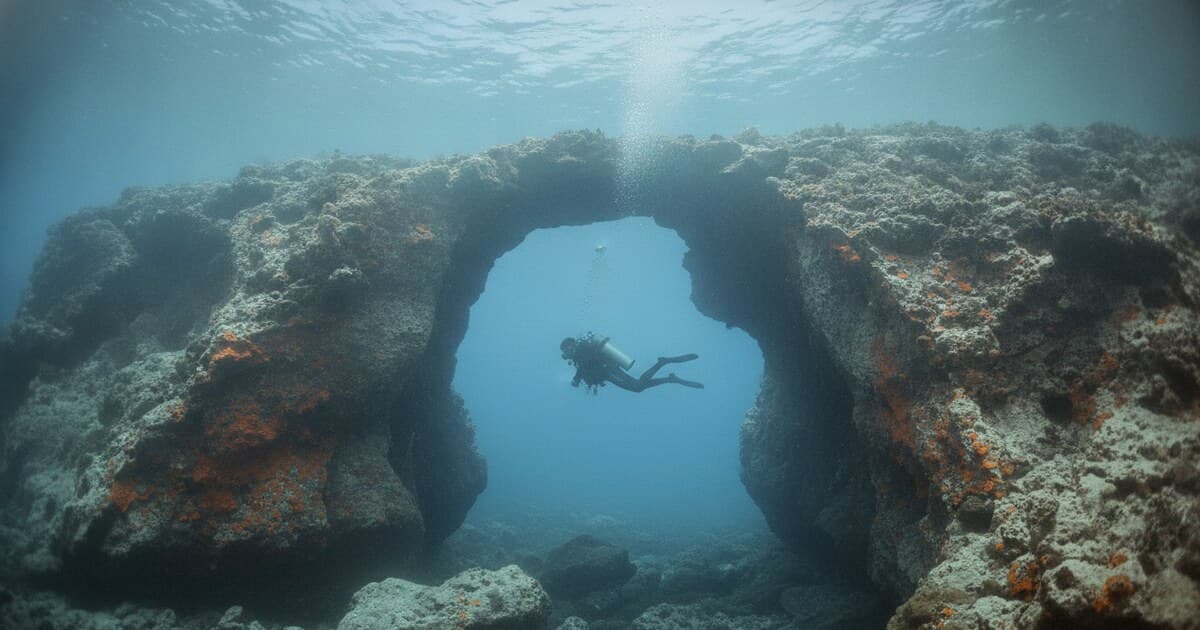
The Blue Hole (6-25m) is Gozo's most recognised dive. The sinkhole drops to 6 metres, with an arch at 7 metres opening onto the outer reef wall. Below the arch, orange sponges and anemones cover the limestone, and the collapsed Azure Window has created a maze of swim-throughs and cavern passages above and below 15 metres. Conditions depend heavily on wind: west winds create dangerous surge at the entry point, so check the forecast before committing. For a full write-up of the Blue Hole including the best entry sequence and what to expect at each depth band, see our Blue Hole Gozo guide.
Cathedral Cave (11-21m) sits in the Wied il-Ghasri gorge on the north coast, reached by 100 steps down to the water. The cave earns its name from the scale of its interior and the blue light that filters in from below the waterline. You can surface inside. The site holds nudibranchs year-round and is one of the more atmospheric dives on the island.
Advanced Open Water (deeper profiles)
The Inland Sea (10-29m wall) starts as a lagoon behind a narrow sea arch. You swim through the tunnel keeping below 5 metres to avoid boat traffic at the surface, then the seabed drops away into a wall that continues well past 30 metres. The tunnel itself, lit only by a narrow strip of blue light above, is one of the more memorable passages in Mediterranean diving. AOW certification is required for the deeper section.
Ras il-Hobz (25-30m) is a north-coast macro site: a 10-minute underwater swim from shore leads to a shelf of nudibranchs, flatworms, and dentex. Mostly current-free but requires solid orientation skills on the return.
Advanced (deep and technical profiles)
Double Arch (30-36m) takes planning. Two stacked arches form a cavern-within-a-cavern at depth. Reaching them requires a 15-minute surface swim from Xwejni Bay, then careful depth management to hit the arches at the right point. The site is worth it, but a guide on the first visit isn't optional.
MV Karwela (34-42m) is a passenger ferry deliberately scuttled in 2006 off Mgarr. The vessel sits upright, with an intact internal staircase accessible via guided penetration routes. Bottom time needs managing to stay within NDL. It sits alongside MV Xlendi, a smaller ferry scuttled at the same location. Our wreck diving Malta and Gozo guide covers the full penetration routes and certification requirements for both vessels.
When to Dive in Gozo
The season runs March to November. Year-round diving is possible in a 7mm wetsuit through winter, but most visiting divers plan for April through October.
July and August bring the warmest water at 24-26°C and the most crowds. Groups at the Blue Hole start stacking up at the car park by 9am in peak summer.
September is the practical sweet spot. Water holds at 24-25°C, visibility picks up as summer plankton blooms clear, and visitor numbers drop sharply after the first week of the month. You get warm water, long surface intervals in good weather, and the Blue Hole entry to yourself before noon.
October is worth considering if you can tolerate 22°C water. Conditions are often the clearest of the year and dive centre prices drop noticeably once peak season wraps up.
Avoid January and February unless you're training specifically for cold-water exposure. Water drops to 15-16°C and the Dwejra sites are frequently closed by westerly swells.
What It Costs to Dive in Gozo
Pricing is consistent across most centres on the island:
- Single guided dive (equipment included): €38 to €65
- 4-dive package: from €132
- 10-dive package: around €540
- PADI Open Water course: €470 to €550
- PADI Advanced Open Water: from €350
Most centres quote all-inclusive rates covering air, weights, equipment, guide, and transport to the site. Ask whether the rate includes personal kit rental if you're not travelling with your own BCD and regulator. That gap can be €15 to €20 per dive.
A week's diving (10 dives over five days, shared transfers, accommodation in a local guesthouse) runs roughly €900 to €1,400 all-in depending on when you travel and group size.
Getting to Gozo from Malta
Gozo is a 25-minute ferry crossing from Cirkewwa at the northern tip of Malta. Gozo Channel operates the service roughly every 45 minutes in each direction, 24 hours a day. The crossing costs around €4.65 per person each way as a foot passenger.
From Malta International Airport, a direct taxi to Cirkewwa takes around 45 minutes and costs €30 to €40. Buses on routes 222 and X1 run regularly and take roughly 75 minutes at a lower cost.
Most divers base themselves in Gozo for two or three nights rather than commuting from Malta daily. Xlendi, Marsalforn, and Victoria are the main villages for accommodation near the dive centres.
Frequently Asked Questions
Is Gozo suitable for beginner divers?
Yes. Several sites suit Open Water divers, including Xlendi Tunnel (10-11m), Ix-Xini bay (max 15m), and the shallower sections of the Blue Hole. Most centres also offer Discover Scuba tasters for non-certified guests at these sites.
Do I need to bring my own equipment to dive in Gozo?
No. All Gozo dive centres rent full equipment sets. If you have your own BCD and regulator, bringing them saves €15 to €20 per dive. Wetsuits are worth renting locally since the right thickness changes by season: 3mm in summer, 5 to 7mm from November onwards.
Can I dive the Blue Hole and Inland Sea on the same day?
Yes, this is the standard combination. Both sites are at Dwejra and share the same car park. Most guided days start at the Blue Hole for the deeper first dive, surface, then continue to the Inland Sea. A standard two-dive day runs from roughly 9am to 1pm.
What is the best month to dive in Gozo?
September. Water temperature holds at 24-25°C, visibility is at its clearest as summer plankton clears, and crowds drop sharply after the first week of the month. October is a close second for even quieter conditions at slightly cooler water.
Is diving in Gozo better than Malta?
They suit different preferences. Malta has more accessible wrecks in the 18 to 36 metre range. Gozo has the better geological sites, including the Blue Hole, Cathedral Cave, and the Inland Sea tunnel. Most visiting divers spend a day on Malta's wrecks and base the rest of their trip in Gozo. Our guide to diving in Malta covers the full mainland wreck sites alongside the cross-island logistics.
Planning a Gozo dive trip? Diving Scanner lists verified dive centres in Malta and Gozo with real availability and pricing. Search by date and party size to see open slots, then book with a 10% deposit. The balance goes directly to the centre on the day.
Frequently asked questions
+Is Gozo suitable for beginner divers?
Yes. Several sites suit Open Water divers, including Xlendi Tunnel (10-11m), Ix-Xini bay (max 15m), and the shallower sections of the Blue Hole. Most centres also offer Discover Scuba tasters for non-certified guests at these sites.
+Do I need to bring my own equipment to dive in Gozo?
No. All Gozo dive centres rent full equipment sets. If you have your own BCD and regulator, bringing them saves €15 to €20 per dive. Wetsuits are worth renting locally since the right thickness changes by season: 3mm in summer, 5 to 7mm from November onwards.
+Can I dive the Blue Hole and Inland Sea on the same day?
Yes, this is the standard combination. Both sites are at Dwejra and share the same car park. Most guided days start at the Blue Hole for the deeper first dive, surface, then continue to the Inland Sea. A standard two-dive day runs from roughly 9am to 1pm.
+What is the best month to dive in Gozo?
September. Water temperature holds at 24-25°C, visibility is at its clearest as summer plankton clears, and crowds drop sharply after the first week of the month. October is a close second for even quieter conditions at slightly cooler water.
+Is diving in Gozo better than Malta?
They suit different preferences. Malta has more accessible wrecks in the 18 to 36 metre range. Gozo has the better geological sites, including the Blue Hole, Cathedral Cave, and the Inland Sea tunnel. Most visiting divers spend a day on Malta's wrecks and base the rest of their trip in Gozo.
Elena covers dive destinations around the Mediterranean — where to go, when the water is worth it, and what a week of diving actually costs.
See live offers from local dive centres — pick a date and compare.
Scan for dives →Planning the trip? Diving in Malta →
Keep reading
Your guide to diving in Australia: the Great Barrier Reef, Ningaloo Reef, SS Yongala wreck, with seasons, costs and cert levels for each.
Plan your Indonesia dive trip: best regions from Raja Ampat to Lembeh, when to go, what certification you need, and what it costs.
Plan your dive trip to Vietnam. Con Dao, Nha Trang, Phu Quoc and the Cham Islands compared by site, season, depth and cost.