Diving in Larnaca, Cyprus: Sites and Seasons
Dive sites, seasons and conditions for Larnaca, Cyprus: the MS Zenobia wreck, HMS Cricket, the Elpida and shallow reefs for all levels. What to dive and when.
See live offers from local dive centres — pick a date and compare.
Scan for dives →Larnaca sits on Cyprus's south-east coast, roughly equidistant from the airport and the Troodos foothills, with a marina that puts dive boats on the water in five minutes. Diving in Larnaca, Cyprus is built around the MS Zenobia, a 172-metre ferry that sank in June 1980 and now draws tens of thousands of divers every year, but there's a full week of diving here beyond that one wreck. HMS Cricket, the Elpida cargo ship, and a cluster of purpose-sunk artificial reefs fill the gaps between Zenobia visits, and visibility running to 25-40 metres makes all of it straightforward to navigate.
Diving in Larnaca, Cyprus centres on the MS Zenobia, one of the world's top ten wreck dives at 16-42m depth. HMS Cricket (33m), the Elpida cargo ship (30m) and several shallow artificial reefs at 6-16m complete the local site list. The season runs April through November, with peak water temperatures of 27-28°C from July to September.
The Zenobia: Larnaca's Flagship Wreck
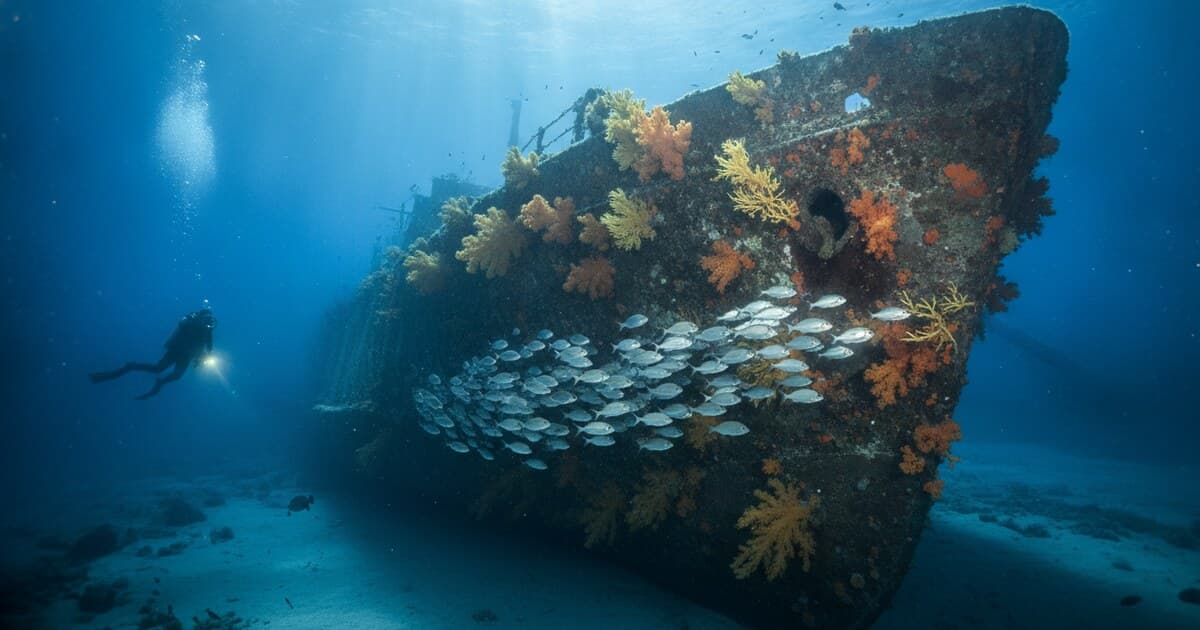
The MS Zenobia is a Swedish roll-on roll-off ferry that sank in June 1980 on her maiden voyage, coming to rest on her port side on the sea bed at 42 metres. The starboard side of the hull, now facing upward, sits at 16-18 metres.
The Zenobia is 172 metres long and carries 104 articulated lorries still secured to their original truck decks, undisturbed since 1980. Open Water certified divers can reach the upper hull and superstructure at 16-24 metres, covering the bridge, promenade deck and upper cargo holds within recreational limits. Advanced divers penetrate the lower holds and engine room, where the lorry decks stretch further than you can see at any one time. Visibility on the upper sections typically runs 20-25 metres; the deeper interior is cleaner still, because the hull is large enough that sediment doesn't cloud between divers. Grouper, barracuda, amberjack and large bream use the structure as a permanent feeding station, and occasional tuna pass through. Most divers run two dives per trip, because a single dive covers only a section of the wreck. Dive boats from Larnaca Marina reach the site in about 15 minutes.
Dive Sites in Larnaca, Cyprus
Beyond the Zenobia, the bay holds a spread of sites covering every depth and certification level.
HMS Cricket is a WWII-era gunboat that survived the war and was sunk in 1947 after being used for target practice off Larnaca Bay. She lies upside down at 33 metres maximum depth, with accessible sections at 20-25 metres. Visibility typically runs 15-20 metres. The hull is heavily encrusted after decades underwater, and moray eels, grouper and octopuses have settled in permanently.
The Elpida is a 63-metre cargo ship deliberately sunk off Oroklini, north of Larnaca. She sits upright on sand at 30 metres, with the upper deck reachable at around 20 metres. The upright position makes navigation straightforward, and the hold openings are wide enough for guided penetration dives without requiring technical training.
Fraggle Rock (also marked as the LEF1 Artificial Reef on some charts) is a collection of military hardware on the sea bed: an old helicopter, a dump truck, a barge and assorted construction equipment spread across the sand at up to 16 metres. It's shallow enough for beginner dives, shore entry keeps it accessible, and lionfish, octopuses and sea bream have moved in among the vehicles.
Pyla Sea Caves reach a maximum of just 6 metres. Access is boat-only, and the caves shelter crustaceans and cephalopods in calm, sheltered conditions. A comfortable choice for a gentle third dive or a relaxed afternoon session after a morning on the deeper wrecks.
Larnaca Jetty (Dhekelia SBA Jetty) is a military pier with training platforms and a sunken armoured car visible at 6 metres. Used mainly for refreshers and beginner sessions, but the sandy bottom around the structure holds enough marine life to keep the dive interesting.
Sheep Dip is a beach entry site with low rock formations and small caves in the 6-10 metre range. It's regularly used as a second site when boats are booked out or conditions push divers toward a calmer, shallower option.
When to Dive in Larnaca, Cyprus
The season runs April through November. Most local dive centres open fully in April and run until late October.
June through September is the warmest window, with water temperatures between 24°C and 28°C, minimal current and visibility frequently reaching 30-40 metres at the Zenobia. These months are also the busiest; booking Zenobia trips in advance is worth doing, particularly in July and August.
May and October are often the smarter choice if you have flexibility on travel dates. May brings warming water around 21-22°C, lighter boat traffic and full site access. October holds the residual summer heat at depth, so water temperatures stay near 24-25°C even as air temperatures drop, and the midsummer crowds have thinned. Visibility in both months regularly reaches 30 metres or beyond.
Winter diving is possible for those with a 7mm wetsuit. Water drops to around 16-17°C in January and February. Visibility on undisturbed winter days is often excellent, partly because less boat traffic means cleaner water columns and settled sediment, and you'll have most sites to yourself.
The sea around Larnaca is generally calm and free of strong currents. Prevailing winds occasionally build surface chop in spring, but the Zenobia sits far enough offshore that the site itself usually stays manageable even when the marina is choppy.
Beginner Diving in Larnaca
Larnaca handles first-time divers well. Discovery dives, sometimes called try dives, are available from age 8 with no prior experience required. You'll get a surface briefing and go to around 5-6 metres with an instructor alongside; Fraggle Rock and the Larnaca Jetty area are the standard sites for this format, both shallow enough that conditions stay comfortable.
Open Water certification takes four days and qualifies you to 18 metres. Once certified, the upper sections of the Zenobia, the shallower parts of HMS Cricket, and the Elpida's upper deck all fall within reach. Courses run under PADI, SSI and NAUI and can start any day of the season.
The Zenobia, despite its reputation as a serious dive, is genuinely accessible to newly qualified divers. The upper hull at 16-18 metres is well within Open Water limits, and there's no requirement to penetrate the wreck to have a worthwhile visit. The fish life on the upper sections alone makes the trip worth it.
If you're planning to cover more of the island, scuba diving in Protaras runs on the same seasonal calendar and several operators run combined east-coast and Larnaca trips. Many divers base in Larnaca for Zenobia access and do a day trip east.
How to Find and Book Diving in Larnaca
Diving Scanner lists verified dive centres operating in the Larnaca area with real-time availability and upfront pricing. You search by date and party size, see which slots are open and secure a spot with a 10% deposit. The remaining balance goes directly to the dive centre. Centres are manually reviewed before listing, and ratings are written only by divers who completed a booking through the platform.
Groups larger than 8 divers have a private charter inquiry route available. For an overview of diving across the whole island, the Cyprus diving guide covers all regions, seasonal conditions and how the different areas compare.
Frequently Asked Questions
Is Larnaca a good base for diving in Cyprus?
Yes, and arguably the strongest single base on the island. The Zenobia is a 15-minute boat ride from the marina, and the spread of other sites at different depths means you can fill several days without repeating anything. Paphos and Protaras have their own merits, but Larnaca is the only base where the world-class wreck is local rather than a day trip away.
How deep is the Zenobia wreck?
The sea bed sits at 42 metres and the hull rests on its port side, with the starboard side at 16-18 metres. Open Water certified divers can access the upper hull and superstructure at 16-24 metres. Penetrating the lower holds and engine room is best reserved for Advanced-certified divers or those under direct instructor supervision.
When is the best time to dive in Larnaca?
May to October covers the comfortable window. June to September is warmest (24-28°C) and busiest. May and October offer shoulder-season temperatures and fewer boats, and October in particular holds summer warmth at depth while the crowds thin out. Winter diving continues with a 7mm wetsuit.
What certification do I need for the Zenobia?
An Open Water certification is enough for the upper sections at 16-24 metres. For penetrating the lower holds, engine room and truck decks, an Advanced Open Water or wreck specialty certification is the standard recommendation. Discovery dives to the upper hull are available for uncertified divers with a registered instructor.
What marine life will I see diving in Larnaca?
Grouper, barracuda, amberjack, large bream and occasional tuna are common on the Zenobia. HMS Cricket holds moray eels, octopuses and sea bream. Fraggle Rock regularly turns up lionfish, octopuses and nudibranchs. Sea turtles appear at several of the shallower sites during the warmer months. Visibility during the season frequently exceeds 25 metres.
Search Diving Scanner with your dates and party size to compare what's available from Larnaca's verified dive centres.
Frequently asked questions
+Is Larnaca a good base for diving in Cyprus?
Yes, and arguably the strongest single base on the island. The Zenobia is a 15-minute boat ride from the marina, and the spread of other sites at different depths means you can fill several days without repeating anything. Paphos and Protaras have their own merits, but Larnaca is the only base where the world-class wreck is local rather than a day trip away.
+How deep is the Zenobia wreck?
The sea bed sits at 42 metres and the hull rests on its port side, with the starboard side at 16-18 metres. Open Water certified divers can access the upper hull and superstructure at 16-24 metres. Penetrating the lower holds and engine room is best reserved for Advanced-certified divers or those under direct instructor supervision.
+When is the best time to dive in Larnaca?
May to October covers the comfortable window. June to September is warmest (24-28°C) and busiest. May and October offer shoulder-season temperatures and fewer boats, and October in particular holds summer warmth at depth while the crowds thin out. Winter diving continues with a 7mm wetsuit.
+What certification do I need for the Zenobia?
An Open Water certification is enough for the upper sections at 16-24 metres. For penetrating the lower holds, engine room and truck decks, an Advanced Open Water or wreck specialty certification is the standard recommendation. Discovery dives to the upper hull are available for uncertified divers with a registered instructor.
+What marine life will I see diving in Larnaca?
Grouper, barracuda, amberjack, large bream and occasional tuna are common on the Zenobia. HMS Cricket holds moray eels, octopuses and sea bream. Fraggle Rock regularly turns up lionfish, octopuses and nudibranchs. Sea turtles appear at several of the shallower sites during the warmer months. Visibility during the season frequently exceeds 25 metres.
Elena covers dive destinations around the Mediterranean — where to go, when the water is worth it, and what a week of diving actually costs.
See live offers from local dive centres — pick a date and compare.
Scan for dives →Planning the trip? Diving in Cyprus →
Keep reading
Plan your Great Barrier Reef dive trip: best sites, best season, realistic costs and how to choose between day trips and liveaboards.
A practical guide to diving in Bali: the best sites from Tulamben to Nusa Penida, seasonal timing, realistic costs and how to find a dive centre.
Koh Tao diving: 25+ sites, PADI Open Water from $290, and warm water year-round. This guide covers the best sites, seasons, and real costs.