Diving in the Philippines: Sites, Season and Costs
Philippines diving guide: Coron wrecks, Malapascua thresher sharks, Tubbataha reef. Real costs, certification levels and the best months to go.
See live offers from local dive centres — pick a date and compare.
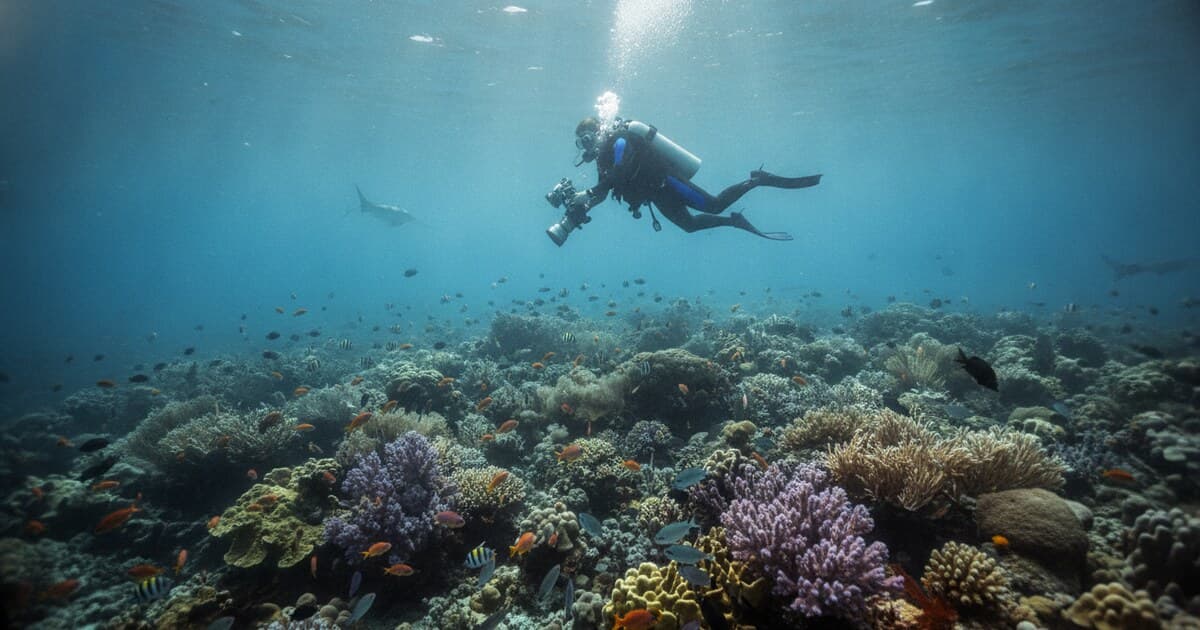
Scan for dives →The Philippines holds 7,641 islands and sits at the heart of the Coral Triangle, the region scientists identify as the most biodiverse marine ecosystem on Earth. On a single trip you can drift through the holds of Japanese warships in Coron Bay, watch thresher sharks surface from the deep off Malapascua at first light, and circle sardine tornadoes that blot out the sun at Moalboal. Few dive destinations pack that range into one country.
Diving here works at every level. Beginners can get an Open Water certification for around USD 320-380 and reach most headline sites within days of finishing the course. Advanced divers have Tubbataha Reef, a remote UNESCO-listed atoll accessible only by liveaboard between March and June, where visibility tops 50 metres and hammerheads, manta rays and grey reef sharks gather in numbers found almost nowhere else.
This guide covers the main dive regions, what each costs, the best months to visit and which sites require more than a basic Open Water card.
Diving in the Philippines puts you at the centre of the Coral Triangle, the world's most biodiverse marine region. Best conditions run November to April. Day dives cost USD 30-65 at most centres, and an Open Water course averages USD 300-380. Tubbataha Reef is accessible by liveaboard only from mid-March to mid-June.
Search for dive centres in the Philippines on Diving Scanner — filter by destination and date to see available slots.
What to Know Before Diving in the Philippines
The Philippines sits inside the Coral Triangle, a 5.7-million-square-kilometre region spanning the Philippines, Indonesia, Malaysia, Papua New Guinea, Solomon Islands and Timor-Leste. Verde Island Passage, the narrow channel separating Luzon from Mindoro, holds the highest documented marine species density per square kilometre on Earth, according to a California Academy of Sciences study. Philippine waters shelter over 2,000 fish species, 500-plus coral species and six of the world's seven sea turtle species. Water temperature runs 26-30°C year-round with no cold season. Visibility is site-dependent: Anilao and Puerto Galera typically reach 20-40m, Tubbataha can exceed 50m, and Coron's wrecks vary between 5-30m with thermocline layers below 24m. Currents are manageable at most inshore reefs; drift diving is standard at Verde Island Passage and some Bohol sites. UNESCO designated Tubbataha Reefs Natural Park a World Heritage Site in 1993 and extended the boundary in 2009 to cover 97,030 hectares of open ocean.
The Philippines ranks among the world's top three scuba destinations by most measures and consistently tops Southeast Asia dive polls. Budget-conscious divers come for the low course prices; advanced divers come for Tubbataha and Malapascua. Both groups find it worth the flight.
Best Dive Sites in the Philippines
Coron, Palawan: Wreck Capital
Coron Bay holds twelve Japanese warships sunk in a single US air strike on 24 September 1944. The wrecks sit at 3-43m, with most main structures at 18-24m. The Okikawa Maru (oil tanker, 9-40m), Akitsushima (seaplane tender, 40m max) and Irako (refrigeration ship, 16-43m) are the standouts. Open Water certification covers every wreck. PADI Wreck Diver specialty is optional but worth it if you plan to explore cargo holds. Two-tank wreck charters from Coron town run USD 45-75, including tanks, weights and a guide.
Anilao, Batangas: Macro Paradise
Two hours south of Manila, Anilao is the Philippines' original dive hub and still its best spot for underwater photography. Visibility runs 20-40m across sites including Hydees Point, Cathedral Rock, Beatrice Rock and Sepok Wall. The critters here (nudibranchs, frogfish, pygmy seahorses, mimic octopus) draw photographers from across Asia. Shore dives are possible from most resorts; guided boat dives run USD 25-40 per dive. Open Water covers everything.
Puerto Galera and Verde Island Passage: All Levels
Puerto Galera, three hours from Manila by road and ferry, packs drift dives, wall dives and shallow beginner reefs within a 30-minute boat ride of each other. Verde Island Passage (the world's richest coastal marine area per square kilometre) runs just offshore. A two-tank boat dive costs USD 35-55. The Canyons drift dive requires confident buoyancy, so AOW is recommended there, but most other sites are comfortably OW-accessible.
Bohol and Panglao: Reefs, Walls and Whale Sharks
Panglao Island is the gateway to Balicasag Island, where a wall drops 40m into deep blue water past bull sharks, eagle rays and hawksbill turtles. Nearby Pamilacan Island sees whale shark aggregations from February to May. Boat dives from Panglao run USD 25-45 per dive. OW covers the reef; AOW opens the deeper wall sections more comfortably.
Moalboal, Cebu: The Sardine Run
Moalboal hosts a permanent resident sardine shoal estimated at several million fish. The shoal moves with the current in a shifting column, making for an easily repeatable OW dive about 20m offshore. Pescador Island, a 15-minute boat ride out, has a wall beyond 50m depth and a sea turtle cleaning station on the shallow reef. Shore dives from Moalboal's main strip run USD 10-15 (equipment rental separate); Pescador boat dives run USD 30-45.
Malapascua, Cebu: Thresher Sharks at Dawn
Malapascua is the only place on the planet where thresher sharks can be reliably seen on a regular basis. They surface from deep water to a cleaning station at Monad Shoal (15-23m plateau) between 5:30am and 7:30am most mornings year-round. A dawn thresher dive costs USD 35-55 from Malapascua's dive centres for two dives. April brings manta rays to the shoal as a bonus. The dive is OW-accessible; the early start and the occasional current make AOW a comfortable upgrade. For more on what to expect underwater with large sharks, see diving with sharks.
Tubbataha Reefs Natural Park: The Liveaboard Pinnacle
Tubbataha sits 150km from the nearest inhabited island and is accessible only by liveaboard from Puerto Princesa, Palawan. The season runs strictly from mid-March to mid-June. Visibility tops 50m on clear days. Grey reef sharks, whitetip reefs, hammerheads, mantas, Napoleon wrasse and massive schooling jacks are standard sightings. A 9-day liveaboard trip runs USD 2,500-4,500 depending on the vessel and dates. Most operators require AOW with a logged minimum of 50 dives; check your chosen boat before booking.
Philippines Dive Season: When to Go
The best overall window for diving in the Philippines is November to April. The northeast monsoon (amihan) brings calm seas, good visibility and stable weather across most of the archipelago. May to October is the southwest monsoon (habagat), which brings rougher conditions to Pacific-facing coasts, though the Visayas and parts of Palawan stay diveable through much of it.
Site-specific exceptions matter here:
- Coron: sheltered bay, diveable year-round; peak visibility March-May
- Anilao: clearest March-May
- Puerto Galera: year-round accessible; June-August actually improves conditions at some outer sites
- Tubbataha: mid-March to mid-June only, hard cut-off dictated by sea state
- Malapascua: thresher sharks present year-round; April adds manta rays; typhoon season July-October can close access
- Moalboal: sardines year-round; December-April for best overall visibility
The Philippines sits in an active typhoon corridor. Most storms track through July-November, and dive centres suspend operations when a typhoon passes. Travel insurance that covers trip interruptions is standard practice for anyone diving here. Also plan your return flight carefully: the standard surface interval before flying is 12-18 hours after a single dive and 18-plus hours after multiple days of diving. Full details on recommended waiting times are in our flying after diving guide.
Certification Requirements and Costs
The Philippines is among the cheapest places in the world to get certified. An Open Water course runs USD 300-380 at most resorts in Coron, Puerto Galera or Bohol. Anilao runs slightly higher (USD 350-420) because of its resort pricing structure. Advanced Open Water typically adds USD 200-280.
For day diving, typical costs:
- Shore dives: USD 10-20 (equipment rental separate)
- Single guided boat dive: USD 25-45 at most centres
- Two-tank wreck charter (Coron): USD 45-75
- Malapascua dawn thresher dive (2 dives): USD 35-55
- Tubbataha liveaboard: USD 2,500-4,500 for 9 days
Open Water gets you: All of Coron's wrecks (holds require Wreck Diver specialty, optional), Moalboal sardines, Balicasag wall to 18m, Malapascua Monad Shoal, most of Anilao, most Puerto Galera reefs.
AOW adds: The deeper wall sections at Balicasag and Pescador Island, confident handling of Verde Island Passage currents, and the logged-dive minimum most Tubbataha operators ask for.
The Philippines is also a popular place to try diving for the first time via a Discover Scuba or Try Dive session (no cert required). If you're combining with a Thailand trip, Koh Tao across the Gulf of Thailand is a comparable certification base with similar prices and a strong school network. See our Koh Tao diving guide for a direct comparison.
Choosing Your Base in the Philippines
Different diver types get the most from different regions:
Wreck divers: Coron. Twelve wrecks in one bay, all reachable in a week, with most structures at comfortable recreational depths. Stay 4-5 days minimum.
Macro photographers: Anilao. Shore dive access, proximity to Manila for short trips and the highest critter diversity in the archipelago make it the dedicated photographer's choice.
First-time divers or OW students: Puerto Galera or Bohol. Calm conditions, well-established schools, gentle reefs under 12m and USD 300-380 course prices make both ideal starting points.
Marine life variety: Cebu. Moalboal sardines, Malapascua thresher sharks and nearby Bohol whale sharks sit within a 4-hour drive of each other. Four to five days covers the highlights.
The bucket-list diver: Tubbataha. Save it for when you have 50-plus logged dives, a 9-day window and USD 3,000 budgeted. The open-ocean pelagic density justifies every bit of that.
Frequently Asked Questions
Do I need AOW to dive in the Philippines?
Open Water certification covers most of the famous sites, including Coron's wrecks, Moalboal sardines and Malapascua thresher sharks. AOW is recommended for the deeper wall sections at Balicasag and Pescador Island, and most Tubbataha liveaboard operators require it alongside a minimum of 50 logged dives.
When is the best time to dive in the Philippines?
November to April is the best overall window. Coron and Anilao peak from March to May. Thresher sharks at Malapascua appear year-round, with April adding manta rays. Avoid July to October for typhoon-prone areas in the Visayas.
How much does it cost to dive in the Philippines?
Day dives run USD 25-65 depending on location and boat type. An Open Water course averages USD 300-380. Coron two-tank wreck charters run USD 45-75. Tubbataha liveaboards range from USD 2,500-4,500 for a 9-day trip.
Is the Philippines good for beginner divers?
Yes. Puerto Galera, Bohol/Panglao and Moalboal all have calm, shallow reef dives accessible to OW divers, and courses here are among the most affordable in Asia. The Moalboal sardine run is one of the most spectacular beginner dives available anywhere.
Start Planning Your Philippines Dive Trip
The Philippines covers more diving variety per trip than almost anywhere else in Asia. Wrecks, pelagic sharks, sardine tornadoes, macro critters and the world's most biodiverse reef passages all sit within a single archipelago.
Use Diving Scanner to search dive centres in the Philippines by location, date and group size. Book directly with a 10% deposit to secure your slot.
Frequently asked questions
+Do I need AOW to dive in the Philippines?
Open Water certification covers most of the famous sites, including Coron's wrecks, Moalboal sardines and Malapascua thresher sharks. AOW is recommended for deeper wall sections at Balicasag and Pescador Island, and most Tubbataha liveaboard operators require it alongside a minimum of 50 logged dives.
+When is the best time to dive in the Philippines?
November to April is the best overall window. Coron and Anilao peak from March to May. Thresher sharks at Malapascua appear year-round, with April adding manta rays. Avoid July to October for typhoon-prone areas in the Visayas.
+How much does it cost to dive in the Philippines?
Day dives run USD 25-65 depending on location and boat type. An Open Water course averages USD 300-380. Coron two-tank wreck charters run USD 45-75. Tubbataha liveaboards range from USD 2,500-4,500 for a 9-day trip.
+Is the Philippines good for beginner divers?
Yes. Puerto Galera, Bohol/Panglao and Moalboal all have calm, shallow reef dives accessible to OW divers, and courses here are among the most affordable in Asia. The Moalboal sardine run is one of the most spectacular beginner dives available anywhere.
Elena covers dive destinations around the Mediterranean — where to go, when the water is worth it, and what a week of diving actually costs.
See live offers from local dive centres — pick a date and compare.
Scan for dives →Planning the trip? Diving in Philippines →
Keep reading
Your guide to diving in Australia: the Great Barrier Reef, Ningaloo Reef, SS Yongala wreck, with seasons, costs and cert levels for each.
Plan your Indonesia dive trip: best regions from Raja Ampat to Lembeh, when to go, what certification you need, and what it costs.
Plan your dive trip to Vietnam. Con Dao, Nha Trang, Phu Quoc and the Cham Islands compared by site, season, depth and cost.