Diving with Sharks: What It's Actually Like
Diving with sharks as a recreational diver: the species you realistically meet, how encounters happen, sensible etiquette, and where the Med fits in.
Find the dives where these encounters actually happen.
Scan for dives →Diving with sharks sits at the top of most divers' wish lists and, for divers based around Europe, it comes with an honest geography lesson: the encounters worth travelling for happen in the Red Sea, not the Mediterranean. This guide covers what a real shark encounter is like, which species you can realistically meet, and how to behave when it happens.
What an encounter actually feels like
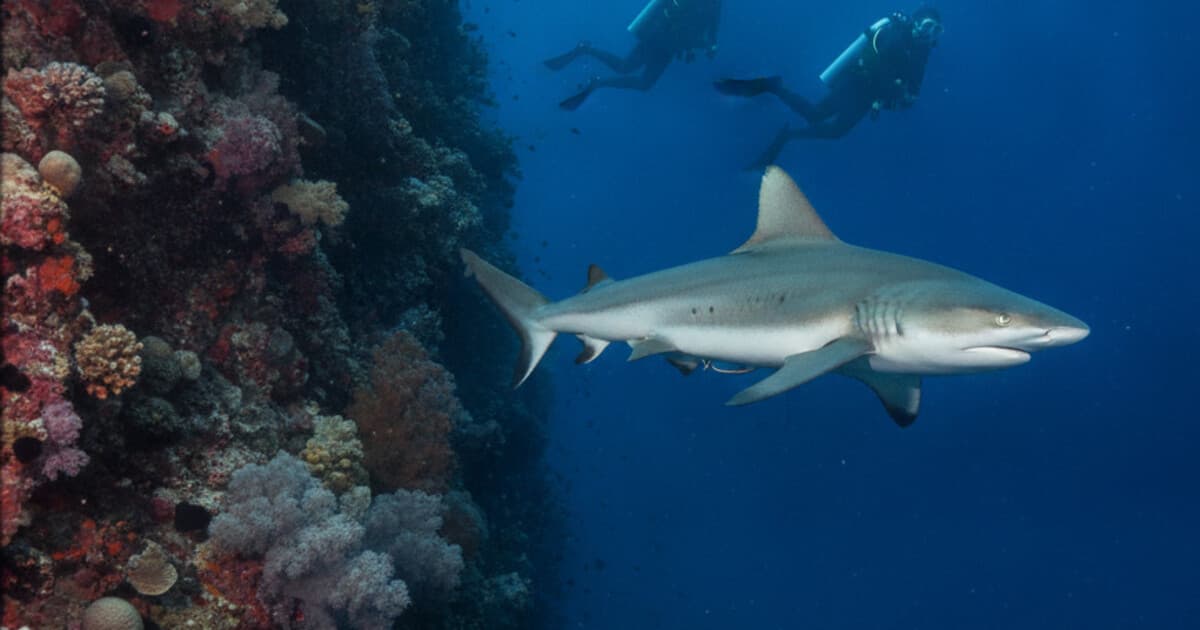
The first surprise is indifference. A reef shark on patrol registers you, adjusts its line by a metre, and continues; you are a large, bubbling, uninteresting object in its territory. The drama is aesthetic rather than adrenal: the shape is unmistakable at any distance, the movement is economy itself, and the whole dive group goes quiet on the regulator at once. Most divers describe their first shark as calming, which nobody believes until it happens.
The species you realistically meet
Grey reef and whitetip reef sharks patrol drop-offs and channels in the Red Sea and the tropics; man-sized, unbothered, the standard first shark. Oceanic whitetips at Egypt's offshore reefs are bolder and demand attention to the briefing. Hammerheads school at remote seamounts in the early season. Whale sharks, the plankton-eating giants, are chance gifts on warm-season crossings. None of these encounters involves bait or cages; they are habitat dives, done where the animals live.
Where, from a European starting point
Egypt is the practical answer. The offshore marine parks — the Brothers islands, Elphinstone, Daedalus — are the eastern hemisphere's most accessible reliable shark diving, reached by liveaboard or day boat from Marsa Alam and Hurghada. These are advanced dives: blue water, current, depth, and briefings that mean it. A diver working up to them has a sensible ladder: certification, an Advanced course, then easy Red Sea reef days before the offshore sites.
And the Mediterranean?
Sharks live in the Med (blues, makos, the occasional deep-water species) but they keep away from coastal dive sites, and you will almost certainly never meet one there. Mediterranean diving sells other things: wrecks in Cyprus, wreck density in Malta, caves, turtles, octopus. An honest dive operator will tell you exactly that, which is a useful test of dive operators.
When to go
Shark diving is seasonal in ways reef diving is not. In the Red Sea's offshore parks, hammerhead schools favour early summer, oceanic whitetips peak in the autumn months around the southern reefs, and winter brings the calmest crowds if not the calmest seas. Whale shark chances ride plankton blooms in the warm months. Any operator running these sites publishes its season honestly, because disappointed shark divers are loud; when the answer to "what will we see in March" is vague, book elsewhere.
Worth knowing: the animals are the fragile party
A third of shark species are threatened, and the reefs where encounters happen increasingly depend on dive tourism for their protected status: a shark on a marine-park reef earns more alive, year after year, than landed once. Choosing operators that follow park rules, keep distance discipline and skip baiting is not just etiquette; it is what keeps the encounter existing. The maths of it is one of diving's quiet success stories, and divers are a large part of why it holds.
Etiquette, briefly
Shark diving etiquette compresses to one idea: be boring. Stay with the group, hold your depth, keep hands in, never chase or corner an animal, and follow the site briefing on positioning. Photographers: the shot improves when the shark chooses the distance.
When your plans head toward shark water, compare dive offers by date and party size — and until then, the Med's own wildlife rewards the same slow, patient diving that sharks eventually will.
Frequently asked questions
+Is diving with sharks dangerous?
The sharks recreational divers actually meet — reef species, nurse sharks, whale sharks — treat divers as scenery. Incidents involving divers underwater are genuinely rare, and dive briefings at shark sites exist to keep it that way. Respectful distance and calm behaviour are the whole job.
+Where can you dive with sharks near Europe?
The Red Sea is the realistic answer: Egypt's offshore reefs — the Brothers, Elphinstone, Daedalus — are known for grey reef and oceanic whitetip sharks, with hammerheads at the remote sites. These are advanced, current-swept dives, usually done by liveaboard or from Marsa Alam and Hurghada.
+Will I see sharks diving in the Mediterranean?
Almost certainly not, and honest centres say so. Sharks exist in the Med but avoid coastal dive sites; in places like Cyprus or Malta you dive for wrecks, caves, turtles and octopus instead. Divers who want sharks plan a Red Sea trip.
+What should you do when a shark appears?
Stay calm, stay with the group, keep your position in the water column and let it pass — which it will. Do not chase, corner or touch. The briefing at any shark site covers the local specifics; the universal rule is that the best encounters happen when divers behave like furniture.
Hana writes about what you actually see down there — the wrecks, the reefs and the animals that make a particular site worth the boat ride.
Find the dives where these encounters actually happen.
Scan for dives →Keep reading
Plan your Great Barrier Reef dive trip: best sites, best season, realistic costs and how to choose between day trips and liveaboards.
A practical guide to diving in Bali: the best sites from Tulamben to Nusa Penida, seasonal timing, realistic costs and how to find a dive centre.
Koh Tao diving: 25+ sites, PADI Open Water from $290, and warm water year-round. This guide covers the best sites, seasons, and real costs.