Wreck Diving Cyprus: Every Site, Every Depth
The complete wreck diving guide for Cyprus: the Zenobia, HMS Cricket, Liberty and every other site, with depths, certs and best seasons.
See live offers from local dive centres — pick a date and compare.
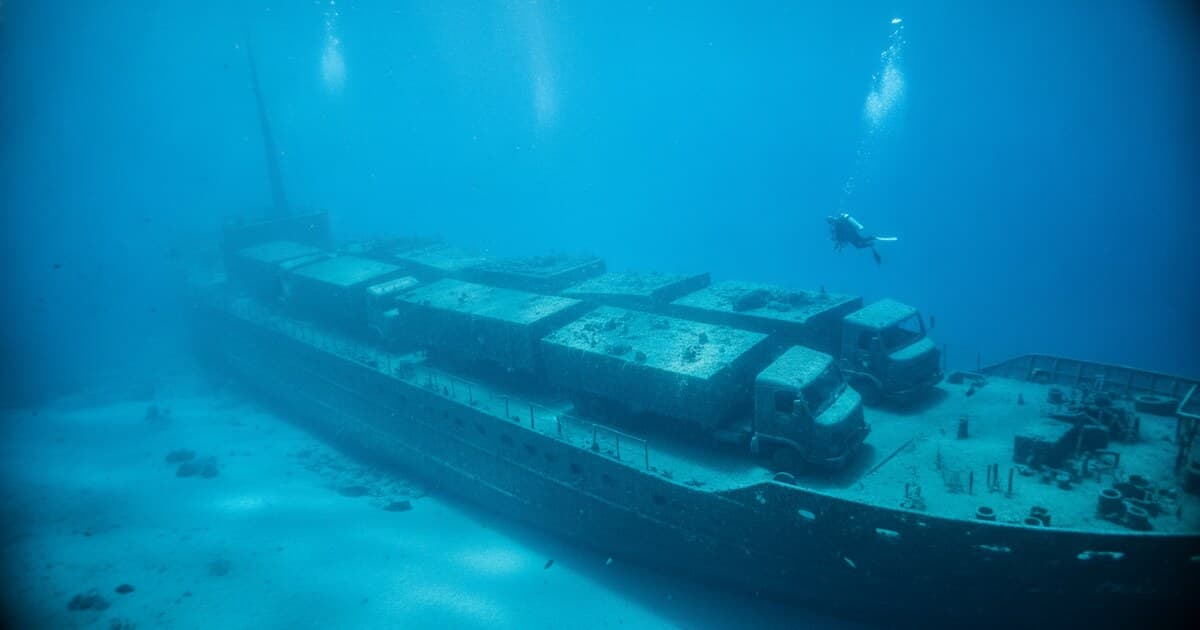
Scan for dives →Wreck diving in Cyprus starts with a site that most experienced divers rate among the world's top 10. The Zenobia, a 172-metre Swedish ferry, sits roughly 1.5 kilometres off Larnaca with her lorries still secured to the cargo deck after 46 years on the seabed. Visibility at the site regularly clears 20 metres. There's almost no current. The crossing from the harbour takes about 10 minutes.
But Cyprus has more than one story underwater. A second wreck sits 500 metres from the Zenobia. A World War I gunboat rests upside down to the northeast. Near Protaras, two purpose-sunk vessels make solid training dives. In Paphos, a pair of 1970s wrecks sit in under 12 metres of water and work well for Open Water divers who want their first taste of wreck diving.
Wreck diving in Cyprus ranges from the 172-metre Zenobia ferry near Larnaca (consistently rated one of the world's top 10 wreck dives) to shallow artificial reefs purpose-sunk for training near Protaras and Paphos. Main sites span 12 to 42 metres. Visibility typically runs 20 to 30 metres, and most wrecks have almost no current.
The Zenobia: Cyprus's Headline Wreck
Zenobia sank on June 7, 1980, during her maiden voyage from Sweden to Syria. A software error in the ballast pumping system kept pushing water into the side tanks, giving the ship a worsening list. Several repair attempts at Larnaca harbour failed, and she went down overnight. She settled on her port side on the seabed, roughly 1.5 kilometres offshore.
The Zenobia is a Swedish roll-on/roll-off ferry, 172 metres long, that sank fully laden during her maiden voyage in June 1980. She rests on her port side on a sandy seabed off Larnaca, with the shallowest accessible section at approximately 16 metres and the deepest point at 42 metres. Her cargo is still on board: 104 lorries, most of them still secured to the deck 46 years later. Visibility at the site regularly exceeds 20 metres, and there's almost no current, which is unusual for a wreck in this depth range. The Zenobia is consistently listed among the world's top 10 recreational wreck dives. Most divers need at least 2 dives to cover the upper decks, bridge and stern sections. The lorry cargo deck requires a separate guided dive. The crossing from Larnaca harbour takes around 10 minutes by boat, making it a practical day trip from the city.
On the outside of the hull, you'll find decades of coral and sponge growth, large grouper hanging in the water column, barracuda drifting around the bow, and the occasional sea turtle passing through. On the upper decks, the bridge, cafeteria, anchor and bow thrusters are all accessible. On the cargo deck, the lorries are lined up exactly as they were loaded, some with cargo containers still intact. Deep inside the hold, bottles of ethyl alcohol from the cargo spilled and now float at neutral buoyancy, appearing to hang in mid-water.
Diving Scanner's Zenobia site page has current availability from Larnaca-based centres running day trips to the wreck.
The Alexandria and HMS Cricket
Two more wrecks sit within easy reach of Larnaca and are often paired with a Zenobia day trip.
The Alexandria is a 35-metre fishing trawler, deliberately sunk in 2006, positioned just 500 metres from the Zenobia. She lies at 30 to 40 metres and can be covered in a single dive. Her smaller scale makes her a useful comparison: the details you notice on a 35-metre vessel are completely different from what you track on a 172-metre ship. Some operators schedule her as the second dive of a twin-tank Zenobia day, which works well if you want to switch between scales.
HMS Cricket is a different kind of dive. She's a 72-metre World War I gunboat that sank in 1947 and now rests upside down at 27 to 33 metres, northeast of Larnaca. Diving an inverted vessel takes adjustment: the keel points upward, orientation inside is disorienting, and the silty seabed means buoyancy control matters more than usual. Nudibranchs and sponges have colonised the hull. Most centres recommend completing a Wreck Diver specialty course and nitrox certification before attempting her interior.
For a full rundown of Larnaca's dive sites, reef and cave sites included, the Larnaca dive sites guide covers what's accessible from the city.
Protaras Wrecks: Liberty and Nemesis III
Near Protaras, two vessels were deliberately sunk to create training sites, and they're well matched for that purpose.
The Liberty is a 37-metre boat sunk in 2009 at 27 metres. All doors and windows were removed before sinking, which makes penetration safe and reasonably well lit. It's a solid choice for divers working towards a Wreck Diver specialty for the first time. The wreck's clean, open layout lets you practise reel and guideline techniques without navigating unexpected obstacles.
The Nemesis III is a 25-metre vessel sunk nearby in 2013 at 26 metres. The two sites sit close enough that some dives cover both in a single tank, depending on how the route is planned with your guide. Together they give beginners and intermediates a full afternoon of wreck diving without managing depth or penetration risk.
The scuba diving in Protaras guide covers the reef sites in the area alongside these wrecks.
Other Cyprus Wrecks Worth Knowing
Paphos: The Achilleas and MV Vera K are two small vessels that sank in the 1970s and now lie in under 12 metres of water. Shallow, well lit and accessible, they're the most approachable wrecks in Cyprus for Open Water divers. The limited depth keeps bottom time generous.
Ayia Napa: The Kerynia is a 29-metre artificial reef wreck sunk in 2015. She's young enough that the reef development is still in early stages, which makes her particularly good for watching marine colonisation in progress. Nudibranchs are a regular sighting. Access is by catamaran from Ayia Napa harbour.
Limassol: The Constandis sank in February 2014 as part of the Wrecks to Reefs programme, a deliberate effort to build artificial reef habitat along the Limassol coastline. She's one of the newer artificial dive sites in South Cyprus.
North Cyprus (brief note): The Wellington Bomber, a World War II aircraft, rests at just over 20 metres east of Kyrenia, with the cockpit section largely intact. Access to North Cyprus requires a separate crossing point; most divers fly into Ercan or cross via Nicosia.
What Certification Do You Need?
Different Cyprus wrecks suit different experience levels. Here's how they break down:
- Open Water: Achilleas and MV Vera K in Paphos (under 12 metres); shallow sections of the Kerynia in Ayia Napa
- Advanced Open Water (minimum recommended): Liberty, Nemesis III, Alexandria, Kerynia full site
- Advanced Open Water, with logged experience confirmed: Zenobia upper decks and bridge; most Larnaca centres ask about logged dives before putting you in the deeper sections
- Wreck Diver specialty and Nitrox recommended: HMS Cricket (inverted, silty, disorienting); Zenobia lorry cargo deck penetration
Nitrox extends bottom time on the Zenobia's deeper routes without requiring technical certification, which is worth considering if you're planning multiple dives over several days. The upper sections are accessible to Advanced Open Water divers, but buoyancy control matters: enclosed spaces carry silt and the deeper routes burn through air quickly.
When to Go
Cyprus has one of the longest diving seasons in the Mediterranean.
Water temperatures range from around 16°C in February to 28°C in August. Visibility peaks between April and October, when the water clears to 20 to 30 metres across most sites. The warmest and calmest conditions run from June through November.
Spring (April to June) is a solid compromise for wreck diving trips: water temperatures are climbing toward 22°C, visibility is high, and the main sites are less crowded than peak summer. The Zenobia draws significant traffic in July and August, with multiple boats mooring at the site simultaneously. Early June or late September tends to be the quieter window.
Winter diving is possible but calls for a thicker suit. A 5mm wetsuit handles October through November; 7mm is more comfortable from December to February. Most Larnaca-based centres run Zenobia trips throughout the colder months for experienced divers.
For a broader look at conditions and seasons across Cyprus, the Cyprus diving guide covers what to expect year-round.
Frequently Asked Questions
What certification do I need to dive the Zenobia?
Most Larnaca dive centres require Advanced Open Water certification as a minimum for the Zenobia's upper decks and bridge. For the lorry cargo deck and deeper interior sections, a Wreck Diver specialty is strongly recommended, and many operators require it or equivalent logged experience. Nitrox certification is useful for extending bottom time on the deeper routes.
How many wrecks can I dive in one trip to Cyprus?
On a week-long trip based in Larnaca, you can cover the Zenobia (multiple dives to see different sections), the Alexandria and HMS Cricket. Adding a half-day trip to Protaras brings the Liberty and Nemesis III into range. Most divers do 2 to 3 dives per day, so a week gives you time to see all the main Larnaca wrecks without rushing any of them.
What's the visibility like at Cyprus wreck sites?
Visibility varies by season but typically runs 20 to 30 metres across the main sites. The Zenobia frequently has 20-plus-metre visibility, clear enough to see the full length of a lorry on the cargo deck from outside the hull. Summer and early autumn generally offer the best conditions.
Can beginners do wreck diving in Cyprus?
Yes. The Achilleas and MV Vera K in Paphos sit in under 12 metres and suit Open Water divers. The Liberty near Protaras is a purpose-built training wreck with penetration hazards removed. The Zenobia's upper decks are accessible to Advanced Open Water divers, though most centres want at least 20 to 30 logged dives before taking you to the deeper sections.
How does the Zenobia compare to other major Mediterranean wrecks?
Experienced wreck divers who've dived the Thistlegorm in Egypt typically rate the Zenobia comparably in terms of scale and historical interest. The main difference is accessibility: the Zenobia's shallow upper sections from 16 metres make her reachable for Advanced Open Water divers, while the Thistlegorm sits deeper overall. For context on what Malta offers as an alternative, see our wreck diving Malta guide.
Find Dive Centres for Cyprus Wrecks
Most Zenobia day trips depart from Larnaca-based centres, while the Protaras wrecks are covered by operators in that area. On Diving Scanner, you can search by date and group size to find available slots. All listed centres are manually verified before going live on the platform, and a cancelled booking gets a full refund including the platform commission.
Search for Cyprus dive centres at divingscanner.net.
Frequently asked questions
+What certification do I need to dive the Zenobia?
Most Larnaca dive centres require Advanced Open Water certification as a minimum for the Zenobia's upper decks and bridge. For the lorry cargo deck and deeper interior sections, a Wreck Diver specialty is strongly recommended, and many operators require it or equivalent logged experience. Nitrox certification is useful for extending bottom time on the deeper routes.
+How many wrecks can I dive in one trip to Cyprus?
On a week-long trip based in Larnaca, you can cover the Zenobia (multiple dives to see different sections), the Alexandria and HMS Cricket. Adding a half-day trip to Protaras brings the Liberty and Nemesis III into range. Most divers do 2 to 3 dives per day, so a week gives you time to see all the main Larnaca wrecks without rushing.
+What's the visibility like at Cyprus wreck sites?
Visibility varies by season but typically runs 20 to 30 metres across the main sites. The Zenobia frequently has 20-plus-metre visibility, clear enough to see the full length of a lorry on the cargo deck from outside the hull. Summer and early autumn generally offer the best conditions.
+Can beginners do wreck diving in Cyprus?
Yes. The Achilleas and MV Vera K in Paphos sit in under 12 metres and suit Open Water divers. The Liberty near Protaras is a purpose-built training wreck with penetration hazards removed. The Zenobia's upper decks are accessible to Advanced Open Water divers, though most centres want at least 20 to 30 logged dives before taking you to the deeper sections.
+How does the Zenobia compare to other major Mediterranean wrecks?
Experienced wreck divers who've dived the Thistlegorm in Egypt typically rate the Zenobia comparably in terms of scale and historical interest. The main difference is accessibility: the Zenobia's shallow upper sections from 16 metres make her reachable for Advanced Open Water divers, while the Thistlegorm sits deeper overall.
Elena covers dive destinations around the Mediterranean — where to go, when the water is worth it, and what a week of diving actually costs.
See live offers from local dive centres — pick a date and compare.
Scan for dives →Planning the trip? Diving in Cyprus →
Keep reading
Plan your Great Barrier Reef dive trip: best sites, best season, realistic costs and how to choose between day trips and liveaboards.
A practical guide to diving in Bali: the best sites from Tulamben to Nusa Penida, seasonal timing, realistic costs and how to find a dive centre.
Koh Tao diving: 25+ sites, PADI Open Water from $290, and warm water year-round. This guide covers the best sites, seasons, and real costs.