Diving in Bali: Sites, Season and Costs
A practical guide to diving in Bali: the best sites from Tulamben to Nusa Penida, seasonal timing, realistic costs and how to find a dive centre.
See live offers from local dive centres — pick a date and compare.
Scan for dives →Bali packs more diving variety into one island than most destinations spread across a whole country. The USAT Liberty, a WWII cargo ship lying on a slope you can reach by walking into the sea, ranks among the most accessible wreck dives anywhere. Manta rays sweep past cleaning stations year-round at Nusa Penida, and every July, Crystal Bay fills with mola-mola (oceanic sunfish each reaching two metres across) rising from cold deep water to be cleaned by smaller fish.
Choosing where to start with diving in Bali, when to go, and what to budget is where planning actually helps. Here's a practical guide.
Bali is one of Southeast Asia's top dive destinations, with sites ranging from the USAT Liberty wreck accessible at 5m to open-ocean encounters with manta rays and mola-mola at Nusa Penida. The best season for diving in Bali runs April to November. Day trips cost roughly IDR 1,300,000 to IDR 2,700,000 (around £60-£125) depending on site and distance.
Diving in Bali: The Main Sites
Six areas cover most of what Bali's diving offers. They span three coastlines and suit every experience level, from first-timers doing a supervised intro dive to advanced divers chasing strong drift currents.
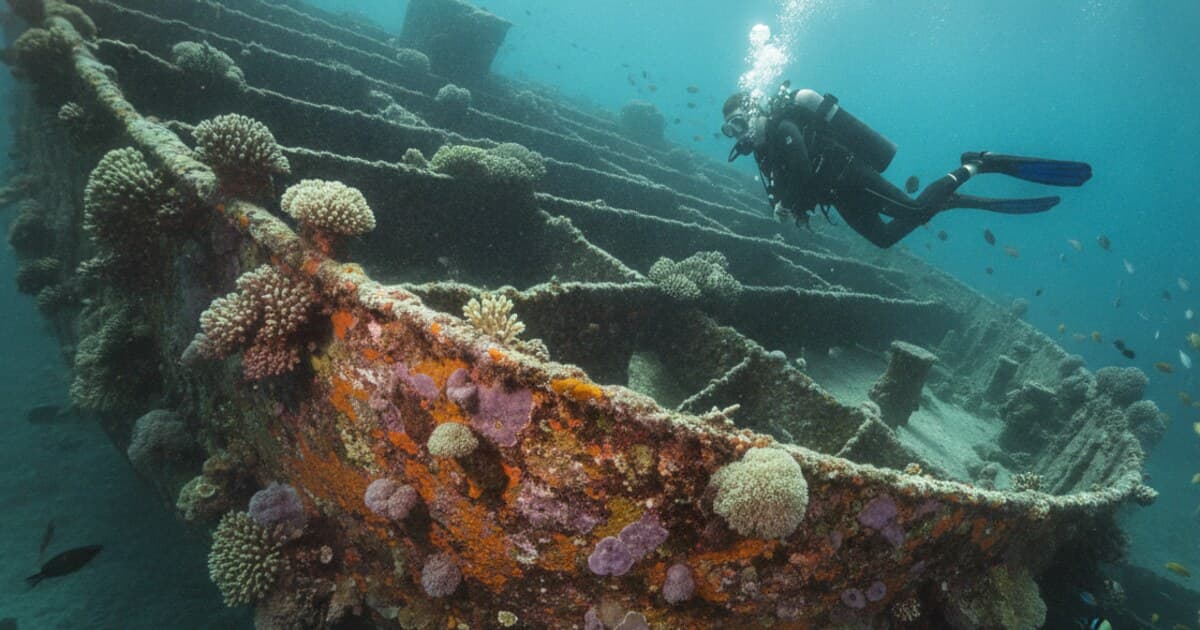
The USAT Liberty is Bali's most famous dive site. The 120-metre US Army cargo ship was torpedoed by a Japanese submarine on 11 January 1942 in the Lombok Strait. Unable to reach Australia, the crew beached the vessel at Tulamben village on Bali's northeast coast.
It sat on the beach for over 20 years until the 1963 eruption of Mount Agung rolled the hull into the sea, where it settled on a steep black-sand slope. Today the wreck runs from 5 metres at the bow (snorkelling depth) down to 29 metres at the stern. An Open Water cert covers the full dive.
The site is reached directly from shore, which keeps costs lower than boat-based sites. Visibility at Tulamben typically reaches 15-25 metres, and the hull is densely covered in soft corals, sponges and sea fans. Resident fish include bumphead parrotfish, batfish, trevally and garden eels along the sand.
Nusa Penida sits 45 minutes by speedboat from Sanur, with two key sites. Manta Point has permanent cleaning stations where reef mantas with wingspans of 3-4 metres circle slowly through the year, pausing at rocky formations while cleaner fish work them over. Crystal Bay is a different dive: a thermocline drops water temperature to 18-22°C, and from July to October, mola-mola rise from the cold layer to the surface.
Currents at Crystal Bay can be unpredictable. Most operators require Advanced Open Water certification before taking divers there.
Amed lies further up the northeast coast from Tulamben. The area has Japanese WWII wrecks in the shallows alongside reef dives, and it's one of the better spots in Bali for macro life. Pygmy seahorses, ghost pipefish, ribbon eels and nudibranchs turn up on most dives.
Padang Bai has two very different options close together. Blue Lagoon is a sheltered bay with shallow reef diving suited to Open Water divers. The Gili Islands off nearby Candidasa (Gili Tepekong, Gili Mimpang and Gili Biaha) offer strong upwellings, shark encounters and drift conditions suited to Advanced Open Water divers with experienced guides.
Menjangan Island, inside West Bali National Park on the northwest tip of the island, consistently has the best visibility in Bali. It often reaches 30 metres or more, with wall dives running along the island's edge and minimal current. The downside is distance: roughly three hours from south Bali, making it a full-day commitment.
Pemuteran, close to Menjangan, is home to the Bio-Rock Project, one of the longest-running artificial reef restoration programmes in Asia. Low-voltage electrical current accelerates coral growth on underwater steel frames, and the reef has thickened considerably over 20 years. Less visited than the east coast sites, with calm conditions for most of the year.
Best Time to Go Diving in Bali
The best season for diving in Bali runs April through November. The southeast trade winds bring dry, calm conditions across most of the island, and visibility at the majority of sites peaks during this window.
July to October is the standout period if mola-mola are on your list. Crystal Bay at Nusa Penida is the primary site, and sightings depend on cold upwelling water drawn up from depth. Manta rays are more consistent, appearing at Manta Point year-round but particularly reliably through the dry season.
December through March brings the northwest monsoon. Seas around south Bali and Nusa Penida can be rough, and some boat operators don't run trips on bad days. The east coast sites (Tulamben, Amed, Padang Bai) are sheltered from northwest swell and stay diveable through most of the wet season.
Water temperature sits between 26-29°C across most of Bali year-round, so a 3mm wetsuit covers most dives comfortably. The exception is Crystal Bay's thermocline during mola-mola season, where a 5mm wetsuit makes the 18-22°C cold layer more manageable for extended surface intervals.
What Diving in Bali Costs
Bali is one of the more affordable dive destinations in Asia, though prices vary considerably by site.
A typical day trip includes two dives, equipment, a guide and the boat transfer for boat-based sites. Prices run from around IDR 1,300,000 at closer, calmer sites (Nusa Dua, Sanur) to IDR 2,700,000 for remote destinations like Menjangan. At current exchange rates, that's roughly £60-£125 or $80-$165 per day.
Single fun dives without a full package can be arranged at many sites, particularly at Tulamben where shore access makes it straightforward to dive with a local guide without booking a full day trip from south Bali.
PADI and SSI courses are noticeably cheaper in Bali than in most Western countries. Open Water certification typically runs IDR 3,500,000 to IDR 5,500,000 (around £165-£260), roughly half what the same course costs in the UK. This makes Bali a practical place to get certified while on holiday.
Prices generally don't include the national park entry fee at Menjangan, paid separately at the park gate, or photography fees at some manta ray sites during busy periods.
Can You Dive in Bali Without a Licence?
Yes. Intro dives (also called Discover Scuba Diving sessions) are available at most Bali dive centres and don't require prior certification.
A supervised intro dive takes you down to around 5-7 metres with an instructor beside you throughout. The session typically starts with a 20-30 minute briefing on basic equipment and hand signals, followed by a shallow reef or sandy-bottom dive lasting 30-40 minutes. Tulamben, Padang Bai and the south Bali sites around Nusa Dua and Sanur are the most common locations for intro dives.
If you plan more than a couple of dives during a Bali trip, an Open Water course makes practical sense. It takes three to four days, covers four open water dives to 18 metres, and qualifies you for the full range of sites including the USAT Liberty and Manta Point. You can read more about what scuba certification involves and what to expect from your first supervised dive before committing to a course.
How to Find a Dive Centre in Bali
Bali has dozens of dive centres, from small family operations based at a single site to larger operators running day trips across the island. PADI and SSI affiliation is a reasonable starting point, since both require instructors to maintain active membership and meet ongoing training standards.
You can search for dive centres in Bali by date and party size on Diving Scanner. The platform shows centres with verified reviews from divers who completed actual bookings, so the feedback reflects real experiences rather than general reputation. Tulamben and Amed centres are geographically close, and comparing them side by side on dates, capacity and reviews takes a few minutes.
Groups larger than 8 divers won't fit on a standard day trip slot. Most centres arrange private charter boats for bigger parties, usually available on request.
Bali fits well into a longer Southeast Asia dive trip. Raja Ampat in West Papua is the next destination for experienced divers chasing the world's highest marine biodiversity count. Koh Tao in Thailand is an easier add-on if you're routing through Bangkok, popular for first certifications and gentle reef dives.
Frequently Asked Questions
Does Bali have good diving?
Bali ranks among Southeast Asia's top dive destinations because of the range packed into one island. The USAT Liberty wreck, Nusa Penida's mola-mola and manta rays, and the macro life at Amed cover very different diver preferences without requiring inter-island flights. Visibility is good, water temperatures are comfortable year-round, and most sites are accessible as day trips from south Bali.
Is diving in Bali expensive?
Relative to Europe or Australia, Bali is very affordable. A two-dive day trip costs IDR 1,300,000 to IDR 2,700,000 (roughly £60-£125). Open Water certification, which costs £400-£600 at most UK dive centres, typically runs £165-£260 in Bali, making it a popular destination for divers wanting to get certified on holiday.
Can I dive in Bali without a licence?
Yes. Intro dives supervised by an instructor go to around 5-7 metres and don't require prior certification. Most Bali dive centres offer them. For deeper sites and diving independently, an Open Water qualification is needed. Courses are available throughout Bali and take three to four days to complete.
What is the best time to dive in Bali?
April to November is the best overall season, with clear visibility and calm sea conditions. July to October is peak mola-mola season at Crystal Bay, Nusa Penida. The east coast sites (Tulamben, Amed, Padang Bai) are sheltered from monsoon swell and dive well year-round, including during the December-March wet season.
Search Diving Scanner to find and compare dive centres in Bali by date, party size and verified diver reviews. Whether you're booking a day trip to the USAT Liberty or planning a week across multiple sites, it shows what's available and how divers rated the experience.
Frequently asked questions
+Does Bali have good diving?
Bali ranks among Southeast Asia's top dive destinations because of the range packed into one island. The USAT Liberty wreck, Nusa Penida's mola-mola and manta rays, and the macro life at Amed cover very different diver preferences without requiring inter-island flights. Visibility is good, water temperatures are comfortable year-round, and most sites are accessible as day trips from south Bali.
+Is diving in Bali expensive?
Relative to Europe or Australia, Bali is very affordable. A two-dive day trip costs IDR 1,300,000 to IDR 2,700,000 (roughly £60-£125). Open Water certification, which costs £400-£600 at most UK dive centres, typically runs £165-£260 in Bali, making it a popular destination for divers wanting to get certified on holiday.
+Can I dive in Bali without a licence?
Yes. Intro dives supervised by an instructor go to around 5-7 metres and don't require prior certification. Most Bali dive centres offer them. For deeper sites and diving independently, an Open Water qualification is needed. Courses are available throughout Bali and take three to four days to complete.
+What is the best time to dive in Bali?
April to November is the best overall season, with clear visibility and calm sea conditions. July to October is peak mola-mola season at Crystal Bay, Nusa Penida. The east coast sites (Tulamben, Amed, Padang Bai) are sheltered from monsoon swell and dive well year-round, including during the December-March wet season.
Elena covers dive destinations around the Mediterranean — where to go, when the water is worth it, and what a week of diving actually costs.
See live offers from local dive centres — pick a date and compare.
Scan for dives →Planning the trip? Diving in Indonesia →
Keep reading
Plan your Great Barrier Reef dive trip: best sites, best season, realistic costs and how to choose between day trips and liveaboards.
Koh Tao diving: 25+ sites, PADI Open Water from $290, and warm water year-round. This guide covers the best sites, seasons, and real costs.
Plan your Raja Ampat dive trip: best sites, season, costs and the liveaboard vs resort question answered with current prices and certification requirements.