Scuba Diving in Thailand: Best Sites, Seasons and Costs
Scuba diving in Thailand: two coasts, two seasons. Similan Islands, Richelieu Rock and Koh Tao — practical guide to sites, timing and costs.
See live offers from local dive centres — pick a date and compare.
Scan for dives →Thailand has two coastlines facing entirely different seas, and that geography shapes everything about diving here. The Andaman Sea to the west holds the Similan Islands, Richelieu Rock, and some of the most biodiverse reef systems in Asia. The Gulf of Thailand to the east has Koh Tao, Sail Rock, and the cheapest Open Water courses in the region.
Most divers choosing scuba diving in Thailand end up deciding based on season. Get the timing wrong and you'll arrive to rough water and closed national parks. Get it right and you'll have visibility stretching past 25 metres, whale sharks at cleaning stations, and manta rays at depth.
Thailand splits into two distinct diving zones: the Andaman Sea (Phuket, Similan Islands, Koh Lanta), with the clearest water and most varied reef diving from November to May, and the Gulf of Thailand (Koh Tao, Koh Phangan), which stays diveable year-round and offers cheaper certification. Together they cover nearly every experience level and budget.
The Andaman Sea vs the Gulf of Thailand
The two seas sit on opposite sides of the Malay Peninsula, creating entirely different weather patterns. The Andaman Sea catches the Southwest Monsoon between May and October, which roughens the surface and cuts visibility. The Similan Islands National Park closes completely from May to October every year to let the reefs recover. For the best Andaman conditions, target November through April: visibility regularly reaches 20-30m, water temperatures sit at 27-29°C, and both the Similan and Surin Islands are accessible. The Gulf of Thailand responds to the Northeast Monsoon instead, so conditions flip. June through September is peak season for Koh Tao and Sail Rock. Koh Tao stays diveable most of the year, which is how it became Thailand's certification hub, with more PADI and SSI schools per square kilometre than almost anywhere else in the region. For manta rays and whale sharks at Hin Daeng and Richelieu Rock, plan for December through April on the Andaman side.
| Region | Best season | Notes |
|---|---|---|
| Andaman Sea (Phuket, Khao Lak, Similan Islands) | November – April | Similan National Park closed May–Oct |
| Koh Lanta / Hin Daeng | November – April | Manta rays peak Dec–Apr |
| Gulf of Thailand (Koh Tao, Sail Rock) | June – September | Diveable most of the year |
| Koh Phangan / Koh Samui area | June – August | Calmest and clearest |
Best Dive Sites in Thailand
Similan Islands
Nine granite islands about 100km northwest of Khao Lak, strictly managed as a national park. Visitor numbers per day are capped and anchoring is banned, which keeps the reef in better shape than most comparable sites in Asia. Site 8 (Beacon Reef) and site 9 (Donald Duck Bay) are the most photographed, with leopard sharks resting on white sand and sea fans the size of small trees. Most divers reach the Similans on a day trip by speedboat from Khao Lak (2-3 hours each way) or on a 3-5 night liveaboard.
Richelieu Rock
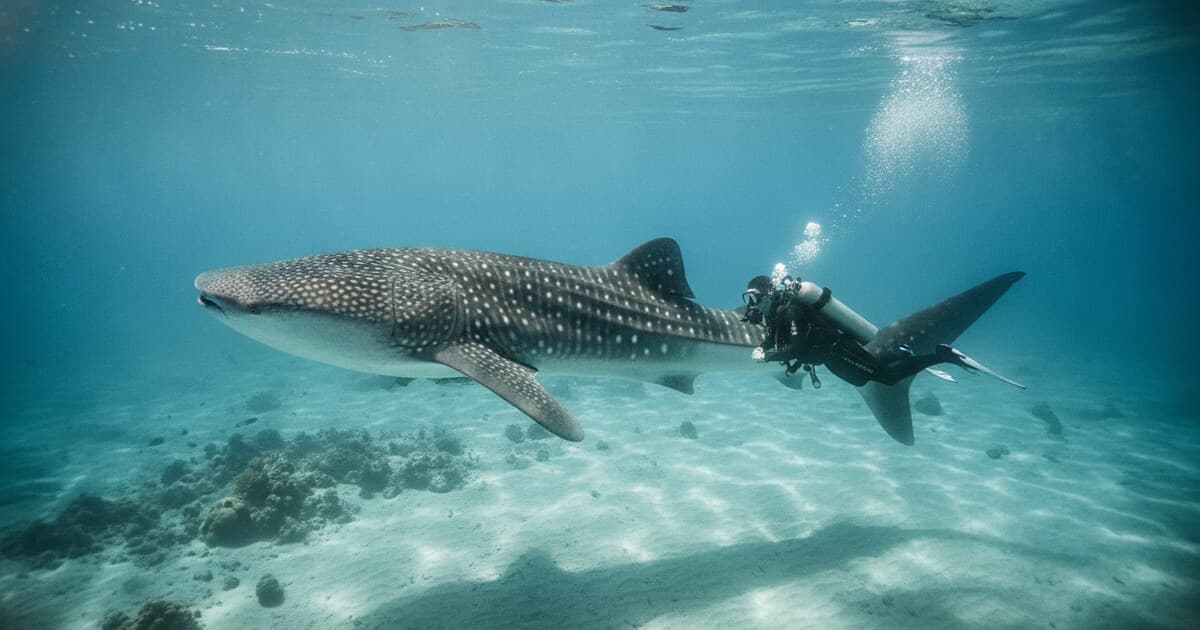
A horseshoe-shaped pinnacle about 180km north of Phuket, close to the Surin Islands. The rock sits at 5-35m depth and pulls strong currents that concentrate plankton and the fish that feed on it. Whale sharks pass through in March and April. Most divers reach Richelieu Rock on a liveaboard combining the Similan and Surin Islands, typically 3-5 nights. It appears consistently on lists of the best dive sites in Southeast Asia.
Hin Daeng and Hin Muang
Two submerged pinnacles near Koh Lanta, about 80km south of Krabi. Hin Daeng (Red Rock) starts at 8m and drops to 65m. Hin Muang goes deeper still. Reef and oceanic manta rays visit the cleaning stations here from November through April. These are advanced sites because of the depth and the current, but divers who time them right rate them among Thailand's best.
Sail Rock
Midway between Koh Tao and Koh Phangan in the Gulf of Thailand, Sail Rock is the standout single dive site on the Gulf side. The main feature is a vertical chimney running from 18m to the surface. Swimming up through it means passing through dense schools of barracuda, trevally and grouper. Visibility reaches 15-20m on good days. Most dive shops on Koh Tao and Koh Phangan run Sail Rock day trips.
Koh Tao
The Gulf's certification hub packs a wide range into a small island: beginner bays like Japanese Gardens and Mango Bay at 5-12m, intermediate pinnacles like Chumphon at 20-40m, and Shark Island for occasional leopard shark encounters. For a complete guide to sites, course providers and what to budget on Koh Tao, the dedicated Koh Tao diving guide covers it in full.
Racha Islands and Koh Phi Phi
Both accessible on a day trip from Phuket. Sites sit at 5-25m and suit Open Water divers and beginners. Leopard sharks rest on sandy patches at Racha Noi. Visibility runs 15-25m from November through April. Good options if you're based in Phuket and want to dive without committing to a liveaboard.
What You'll See Underwater in Thailand
Marine life varies by season and region, but several encounters are genuinely reliable when timed correctly:
- Whale sharks: March and April, mainly at Richelieu Rock and occasionally at Chumphon Pinnacle off Koh Tao
- Manta rays: November through April at Hin Daeng, Hin Muang, and Koh Bon near Khao Lak
- Leopard sharks: Year-round at Racha Noi, Shark Island (Koh Tao), and inside the Similan Islands
- Barracuda and trevally: Consistent at Sail Rock, Chumphon Pinnacle, and several Similan sites
- Sea turtles: Present at most shallow reef sites across both coasts
- Pygmy seahorses and ghost pipefish: Found on sea fans at Richelieu Rock and deeper Similan sites
The Andaman Sea's coral is in better condition than most Gulf sites. The Similan Islands' protected status, with its daily visitor cap and no-anchor rules, has kept the reef healthier than comparable destinations in the region. Around Koh Tao, the shallower bays have taken wear over decades of heavy traffic, though the offshore pinnacles (Chumphon, Southwest Pinnacle, Sail Rock) are largely intact because current keeps boat anchors away.
How Much Does Scuba Diving in Thailand Cost?
Thailand sits at the affordable end of dive destinations, particularly in the Gulf.
Fun dives (certified divers)
A 2-dive day trip from Koh Tao costs 1,500-2,500 THB (roughly $42-70 USD), typically including tanks, weights and a guide. From Phuket, a 2-dive Similan Islands day trip runs around 4,900 THB ($137 USD). Liveaboards to the Similans and Surins start at around $500 for a 3-4 night trip and reach $2,000 or more for higher-end vessels.
Certification courses
Koh Tao is the cheapest place in Thailand for an Open Water course. A PADI or SSI Open Water runs 12,000-15,000 THB ($335-420 USD), covering equipment, pool sessions and 4 open water dives. The same course from a Phuket operator typically costs 16,000-20,000 THB ($445-560 USD), because operational costs there are higher. Koh Tao's competition between schools keeps pricing in check.
Equipment rental
Most day trips include basic equipment (BCD, regulator, wetsuit, tank) in the quoted price. A 3mm shorty works for the Gulf in peak summer. On the Andaman side between November and February, a 5mm wetsuit makes the cooler water more comfortable for repeated dives.
How to Find a Dive Centre in Thailand
Thailand has hundreds of dive centres across both coasts, from small single-location shops at beach resorts to larger operators running multi-site day trips. PADI and SSI affiliation is a reasonable baseline, since both require instructors to maintain active certification and ongoing training standards.
Search for dive centres in Thailand by date and party size on Diving Scanner. The platform shows centres with verified reviews from divers who completed actual bookings, not general reputation ratings. Comparing two Koh Tao operators or looking at what's available for a Khao Lak Similan trip takes a few minutes side by side. Groups larger than 8 divers won't fit a standard day trip slot; most centres arrange private charters on request.
Before flying home, check the surface interval rules. PADI recommends at least 12 hours after a single no-decompression dive and 18 hours after multi-dive days. The flying after diving guide covers the full breakdown by dive profile.
For what to pack for either coast, the scuba diving gear checklist lists what centres typically provide versus what's worth bringing yourself.
Frequently Asked Questions
Is Thailand good for scuba diving beginners?
Yes. Koh Tao has the highest density of certified dive schools in the region and shallow, calm bays suited to first dives and Open Water courses. Phuket's Racha Islands and Koh Phi Phi also have beginner-friendly sites on Andaman Sea day trips. Intro dives supervised by an instructor are available at most centres and don't require any prior certification.
When is the best time to go scuba diving in Thailand?
It depends on the coast. The Andaman Sea (Phuket, Similan Islands, Khao Lak) is best November through April, when the national park is open and visibility reaches 20-30m. The Gulf of Thailand (Koh Tao, Sail Rock) is best June through September but stays diveable most of the year. For whale sharks, March and April at Richelieu Rock. For manta rays, December through April at Hin Daeng and Hin Muang.
Do I need a certification to dive in Thailand?
To join guided fun dives or dive independently, yes, at least an Open Water certification. For a Discover Scuba Diving intro session, no certification is required. You're accompanied by a dive instructor throughout, staying at shallow depth (under 12m). Koh Tao is Thailand's most popular place to earn an Open Water while on holiday, with courses running 3-4 days.
Can you see whale sharks scuba diving in Thailand?
The most reliable location is Richelieu Rock near the Surin Islands, with sightings most common in March and April. Occasional encounters happen at Chumphon Pinnacle off Koh Tao, though timing is less predictable there. For the best chance of a whale shark encounter, a liveaboard combining the Similan and Surin Islands in late March or early April is the route most divers take.
Search Diving Scanner to find and compare dive centres in Thailand by date, party size and verified diver reviews. Whether you're planning a first try dive on Koh Tao or a multi-night Similan Islands liveaboard, it shows what's available and how past divers rated it.
Frequently asked questions
+Is Thailand good for scuba diving beginners?
Yes. Koh Tao has the highest density of certified dive schools in the region and shallow, calm bays suited to first dives and Open Water courses. Phuket's Racha Islands and Koh Phi Phi also have beginner-friendly sites on Andaman Sea day trips. Intro dives supervised by an instructor are available at most centres and don't require any prior certification.
+When is the best time to go scuba diving in Thailand?
It depends on the coast. The Andaman Sea (Phuket, Similan Islands, Khao Lak) is best November through April, when the national park is open and visibility reaches 20-30m. The Gulf of Thailand (Koh Tao, Sail Rock) is best June through September but stays diveable most of the year. For whale sharks, March and April at Richelieu Rock. For manta rays, December through April at Hin Daeng and Hin Muang.
+Do I need a certification to dive in Thailand?
To join guided fun dives or dive independently, yes, at least an Open Water certification. For a Discover Scuba Diving intro session, no certification is required. You're accompanied by a dive instructor throughout, staying at shallow depth (under 12m). Koh Tao is Thailand's most popular place to earn an Open Water while on holiday, with courses running 3-4 days.
+Can you see whale sharks scuba diving in Thailand?
The most reliable location is Richelieu Rock near the Surin Islands, with sightings most common in March and April. Occasional encounters happen at Chumphon Pinnacle off Koh Tao, though timing is less predictable there. For the best chance of a whale shark encounter, a liveaboard combining the Similan and Surin Islands in late March or early April is the route most divers take.
Elena covers dive destinations around the Mediterranean — where to go, when the water is worth it, and what a week of diving actually costs.
See live offers from local dive centres — pick a date and compare.
Scan for dives →Planning the trip? Diving in Thailand →
Keep reading
Okinawa's best dive sites from the Blue Cave to Ishigaki's manta rays, Yonaguni's hammerheads and the Kerama Islands. Costs, season and tips.
Plan your Great Barrier Reef dive trip: best sites, best season, realistic costs and how to choose between day trips and liveaboards.
A practical guide to diving in Bali: the best sites from Tulamben to Nusa Penida, seasonal timing, realistic costs and how to find a dive centre.